
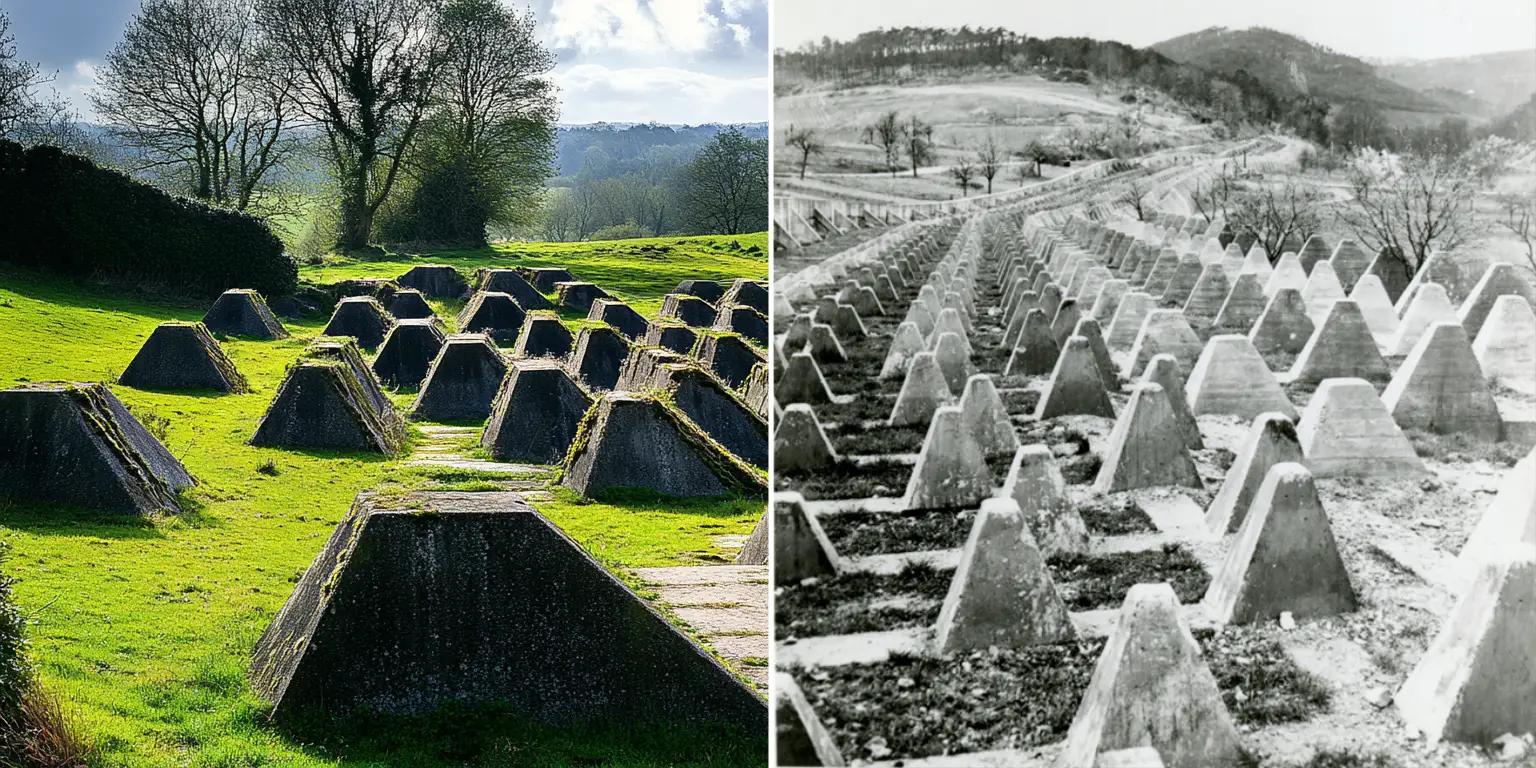
What secrets do the remnants of the Westwall around Aachen hold about one of history’s most pivotal conflicts?
Key Takeaways
- The Westwall, also known as the Siegfried Line, was a massive defensive fortification system built by Nazi Germany between 1938 and 1940, spanning approximately 390 miles along Germany’s western border.
- The section around Aachen was of particular strategic importance due to the city’s position as Germany’s westernmost major urban center and a natural gateway into the country.
- The Westwall consisted of over 18,000 bunkers, tunnels, tank traps, and other fortifications, including the iconic “dragon’s teeth” tank barriers designed to impede Allied advances.
- Despite its scale, the Westwall proved less effective in combat than anticipated, with many fortifications suffering from poor design, hasty construction, and neglect by 1944.
- The Battle of Aachen in October 1944 marked the first major German city to fall to Allied forces, exposing critical weaknesses in the Westwall’s defenses.
- Today, remnants of the Westwall around Aachen serve as historical monuments and educational tools, with some sites preserved and others reclaimed by nature.
- The Westwall’s construction was a massive propaganda effort by the Nazi regime, symbolizing militaristic ambitions and the futility of such fortifications in the face of modern warfare.
- Local preservation efforts and historical tours around Aachen provide visitors with insights into the Westwall’s construction, strategic purpose, and its role in World War II.
- The remnants of the Westwall highlight the consequences of totalitarianism and war, serving as a reminder of the human and material costs of conflict.
- Aachen’s unique historical landscape, combining medieval heritage with World War II fortifications, offers a powerful educational and reflective experience for visitors.
Table of Contents
- Key Takeaways
- Introduction to Westwall around Aachen
- Historical Significance of Westwall
- Time Travel: Journeying Back to the Westwall
- Dragons in History: Mythical Beasts and Symbolic Fortifications
- The Universal Dragon Myth
- Dragons as Metaphors for Human Constructions
- The Westwall as a Modern Dragon
- Symbolic Power and Psychological Impact
- The Fallen Dragon: Ruins and Remnants
- Educational Value of Dragon Metaphors
- Beyond the Metaphor: Historical Reality
- Preserving Memory Through Symbolic Understanding
- Hitler Time Travel: Where History Meets Fantasy
- Aachen Tourism and Westwall Exploration
- Conclusion: The Westwall Around Aachen – Where History Meets Imagination
Introduction to Westwall around Aachen
The Westwall around Aachen stands as a silent sentinel to one of history’s darkest chapters. These concrete and steel fortifications, stretching across the German-Belgian border near the ancient city of Aachen, represent the physical remnants of Adolf Hitler’s defensive strategy during World War II. Today, these weathered bunkers and dragon’s teeth tank barriers continue to dot the landscape, offering visitors a tangible connection to the past.
Built between 1938 and 1940, the Westwall (also known as the Siegfried Line to Allied forces) was Hitler’s answer to France’s Maginot Line. This massive defensive system consisted of over 18,000 bunkers, tunnels, tank traps, and other fortifications spanning approximately 390 miles along Germany’s western border. The section surrounding Aachen held particular strategic importance due to the city’s position as Germany’s westernmost major urban center.
Strategic Significance of Aachen’s Defenses
Aachen’s position made it a natural gateway into Germany from the west. For centuries, armies had moved through this corridor, making it a critical defensive point. When Hitler ordered the construction of the Westwall, the fortifications around Aachen received special attention. Engineers designed an intricate network of bunkers, observation posts, and anti-tank barriers specifically tailored to the rolling hills and forests surrounding the city.
The defensive line wasn’t merely a physical barrier but also served as a powerful propaganda tool. Nazi media portrayed the Westwall as an impenetrable shield protecting the German homeland. Images of the massive concrete structures were distributed widely to boost civilian morale and deter potential attackers.
The Battle for Aachen
In September 1944, American forces approached the Westwall near Aachen, marking the first major battle on German soil. Despite Hitler’s orders to defend the city at all costs, the Westwall proved less formidable than advertised. After fierce fighting, Aachen fell to American forces on October 21, 1944, becoming the first German city captured by the Allies.
The battle revealed critical weaknesses in the Westwall’s design. Many bunkers lacked adequate ventilation, had poor fields of fire, or suffered from hasty construction. Additionally, years of neglect had left many fortifications in disrepair, as resources had been diverted to other fronts.
Remnants of Hitler’s Vision
Today, curious visitors can explore the stubborn remnants of Hitler’s defensive vision scattered throughout the countryside around Aachen. These concrete ghosts serve as powerful reminders of the Third Reich’s militaristic ambitions and ultimate failure. Unlike many wartime structures that were demolished after the conflict, significant portions of the Westwall survived due to the prohibitive cost of removal and their remote locations.
Some bunkers have been preserved as historical monuments, while others have been reclaimed by nature, with trees and vines gradually enveloping the concrete structures. Tank barriers known as “dragon’s teeth” (Drachenzähne) are particularly visible features of the landscape – rows of pyramid-shaped concrete obstacles designed to impede tank movement across open terrain.
A Window to the Past
The fascination with the Westwall around Aachen extends beyond military history enthusiasts. These sites offer everyone a chance to connect with a pivotal moment in world history. Walking among these remnants creates an almost time-travel-like experience, allowing visitors to step back to an era when these now-silent structures stood at the center of global conflict.
The dragon’s teeth tank barriers, in particular, have captured the public imagination. Their name evokes mythological imagery, contrasting sharply with their grim purpose. These concrete formations, resembling the teeth of legendary dragons, were designed not to breathe fire but to halt the mechanical dragons of modern warfare – Allied tanks advancing toward German territory.
As we explore these historical sites today, we’re reminded of how Hitler’s grand defensive strategy ultimately failed to protect the Third Reich from defeat. The Westwall around Aachen represents both the enormous resources poured into Nazi Germany’s war machine and the futility of those efforts in the face of determined Allied forces.
In the following sections, we’ll delve deeper into the specific features of the Westwall fortifications, examine their construction and design, and explore how these historical sites are preserved and interpreted today. We’ll also consider how these remnants of Hitler’s regime continue to serve as important educational tools for understanding the consequences of totalitarianism and war.
Historical Significance of Westwall
The Westwall, also known as the Siegfried Line, stands as one of the most significant military fortifications of the 20th century. This massive defensive line stretching along Germany’s western border has a particularly notable presence around Aachen, where remnants still tell the story of a desperate defensive strategy during World War II.
Origins and Construction of the Westwall
The construction of the Westwall began in 1938 under Adolf Hitler’s direct orders. Initially, the project was called the “Limes Program,” named after the ancient Roman border fortifications. However, Nazi propaganda soon rebranded it as the “Westwall” to create a stronger nationalist sentiment.
The defensive line wasn’t a sudden decision. Rather, it emerged from Germany’s strategic concerns about fighting a two-front war. With aggressive plans for eastern expansion, Hitler needed to secure the western border against France and its allies. Construction accelerated dramatically after the Munich Agreement in September 1938, with over 500,000 workers mobilized to the project.
The scale was truly impressive:
- Over 18,000 bunkers, tunnels, and tank traps
- Approximately 630 kilometers of fortifications
- More than 22,000 concrete structures
- Nearly 240 million cubic meters of earth moved
Workers came from all sectors of German society. The Organization Todt, a civil and military engineering group, managed the massive project, while the Reich Labor Service provided much of the manpower. Local civilians were also drafted to assist, working alongside soldiers and professional construction crews.
Strategic Purpose and Design
The Westwall wasn’t merely a physical barrier but a complex defensive system designed to slow enemy advances and channel attacking forces into predetermined killing zones. The fortifications around Aachen were especially robust because of the city’s strategic location at the border with Belgium and the Netherlands.
The Aachen Westwall section featured several key defensive elements:
- Dragon’s teeth – Rows of pyramid-shaped concrete obstacles designed to impede tanks and armored vehicles
- Bunkers – Reinforced concrete structures housing machine guns and anti-tank weapons
- Tunnels – Underground passages connecting defensive positions
- Command centers – Fortified headquarters for coordinating defensive operations
Military historians note that the Westwall around Aachen represented the most technologically advanced defensive architecture of its time. According to research by the German Federal Archives, the fortifications incorporated lessons learned from World War I trench warfare while anticipating modern mechanized combat.
The Aachen Westwall in Combat
Despite its impressive scale, the Westwall’s actual military effectiveness proved limited. By September 1944, when Allied forces reached the German border near Aachen, many of the fortifications had been stripped of weapons and personnel to reinforce the Eastern Front.
The Battle of Aachen in October 1944 became the first major German city to fall to American forces. The Westwall defenses around Aachen, though formidable on paper, couldn’t compensate for Germany’s dwindling resources and manpower shortages. American forces encircled the city and, after heavy fighting, captured it on October 21, 1944.
The US Army Center of Military History documents how American forces developed specific tactics to overcome the Westwall defenses, including specialized engineer units equipped to clear dragon’s teeth and demolish bunkers.
Hitler’s Remnants: Physical and Ideological Legacy
Today, the Westwall around Aachen represents one of the most visible Hitler remnants in western Germany. Unlike many Nazi-era structures that were completely demolished after the war, sections of the Westwall were simply abandoned due to the enormous cost of removal.
These physical remnants serve as stark reminders of the Nazi regime’s militaristic ambitions. Bunkers, partially buried in earth and overgrown with vegetation, punctuate the landscape. Dragon’s teeth formations emerge from forests like strange archaeological artifacts.
Beyond the physical structures, the ideological remnants of Hitler’s influence can be seen in how these sites are treated today. According to the German Foundation for Monument Protection, many Westwall sites are now protected as historical monuments, representing a complex approach to preserving difficult heritage.
Contemporary Significance
The Westwall around Aachen has transformed from military infrastructure to cultural heritage. Local preservation groups work to maintain select bunkers as educational sites, while environmental organizations note that many abandoned fortifications have become important habitats for bats and other wildlife.
For historians and tourists alike, the Westwall provides a tangible connection to the past. Walking among these concrete remnants offers a more immediate understanding of the war than any textbook could provide. The contrast between the peaceful modern landscape and these ominous structures creates a powerful educational experience.
Researchers from Aachen University have documented how local communities have developed varied relationships with these structures—some embracing them as historical landmarks, others preferring they remain hidden and forgotten.
Conclusion
The Westwall around Aachen represents a complex historical legacy. As one of the most substantial Hitler remnants still visible in the landscape, it serves as both a warning from history and an educational resource. The massive defensive line, once a symbol of Nazi Germany’s military ambitions, now stands as a crumbling reminder of the futility of such fortifications against the inevitable march of both military forces and time itself.
For visitors to the region, these silent concrete sentinels offer a unique opportunity to connect with a pivotal moment in European history, when the tide of war finally turned against Nazi Germany and the Allied forces began their final push into the German homeland.
Time Travel: Journeying Back to the Westwall
Have you ever wondered what it would be like to witness history unfold before your eyes? Time travel offers us a fascinating mental exercise to explore significant historical events like the construction of the Westwall around Aachen. While physically traveling through time remains in the realm of science fiction, our imagination allows us to transport ourselves back to these pivotal moments.
Imagine stepping through a portal and finding yourself in late 1930s Germany. The air is thick with tension as thousands of workers toil away on what would become one of the most extensive fortification systems in modern military history. The Westwall stretches before you, a concrete testament to the growing militarization of Nazi Germany.
Witnessing the Construction
If time travel were possible, what would you observe at the Westwall construction sites?
- Thousands of workers—both civilian and military—laboring around the clock
- Massive concrete bunkers slowly taking shape across the landscape
- Military engineers supervising the strategic placement of dragon’s teeth tank obstacles
- Local communities being transformed as the massive project reshapes the countryside
According to historical records, the construction of the Westwall employed over 20,000 workers at its peak. Time travelers would witness not just a military project, but a massive propaganda effort designed to showcase German engineering prowess and military might.
The Human Element Through Time
Time travel to the Westwall would reveal more than just military preparations. You’d witness the human stories unfolding:
- Families displaced as construction cut through farms and villages
- Workers struggling with dangerous conditions and demanding schedules
- Military planners debating the effectiveness of fixed fortifications
- Local citizens grappling with the transformation of their peaceful borderlands into a militarized zone
These personal narratives often get lost in broader historical accounts but represent the true impact of such massive undertakings.
Observing the Westwall in Action
Fast-forward your imaginary time machine to 1944-45, and you’d witness the Westwall’s actual combat effectiveness as Allied forces approached Aachen.
The Battle of Aachen in October 1944 would show time travelers how the once-mighty fortifications fared against determined American forces. Many bunkers, designed years earlier, proved vulnerable to modern artillery and air power. Yet in some sectors, the defenses slowed the Allied advance considerably.
A time traveler would notice how the German defenders adapted the static defenses, using the concrete structures as rallying points while developing more flexible defensive tactics around them.
Technological Perspective Through Time
One fascinating aspect of time travel to the Westwall would be observing the evolution of military technology. The fortifications were designed to counter threats understood in the 1930s, but by 1944, warfare had changed dramatically.
You would witness:
- Bunkers designed for weapons that became obsolete during the war
- Defenses that failed to account for the increased power of aerial bombardment
- The contrast between the static defense philosophy of the Westwall and the mobile warfare that dominated World War II
This technological mismatch highlights how quickly military innovation outpaced fixed defenses, a lesson that resonates through military history.
Emotional Impact of Time Travel
Perhaps the most powerful aspect of imagining time travel to the Westwall is the emotional dimension it adds to our understanding of history. Standing in the muddy construction sites of 1938 or amid the chaos of battle in 1944 would provide insights no textbook could convey.
You would feel:
- The weight of impending conflict hanging over every worker placing concrete
- The fear of soldiers manning positions they suspected might not withstand modern attacks
- The desperation of civilians caught between advancing armies and crumbling defenses
This emotional connection transforms abstract historical facts into human experiences we can relate to across time.

Modern Reflections Through a Time Traveler’s Eyes
If our imaginary time traveler could jump between past and present, they would gain unique insights into how we remember and memorialize such sites today.
The contrast would be striking—from bustling construction sites and battlegrounds to quiet memorial spaces and hiking trails. Many Westwall bunkers around Aachen now stand as silent monuments, slowly being reclaimed by nature or preserved as historical sites.
This before-and-after perspective reminds us how quickly the urgent priorities of one era can become the historical curiosities of another.
While actual time travel remains beyond our grasp, these mental journeys to the Westwall around Aachen help us connect more deeply with history. They transform distant events into vivid experiences we can almost touch, helping us understand not just what happened, but how it felt to be there when history was being made.
Dragons in History: Mythical Beasts and Symbolic Fortifications
Throughout human history, dragons in history have captivated our imagination as powerful symbols of both destruction and protection. These mythical creatures appear in countless cultures worldwide, often representing formidable power, wisdom, and sometimes terror.
When we look at imposing historical structures like the Westwall around Aachen, we can draw fascinating symbolic parallels to these legendary beasts. Just as dragons were believed to guard treasures and territories, the Westwall stood as Germany’s concrete and steel guardian during World War II.
The term “dragon’s teeth” refers to a specific type of anti-tank obstacle used extensively in the Westwall.
Why was it called “Dragon’s Teeth”?
- Appearance: The obstacles consisted of rows of large, reinforced concrete pyramids that resembled sharp, jagged teeth, similar to how dragon’s teeth are often depicted in mythology.
- Anti-Tank Defense: These structures were designed to prevent enemy tanks from advancing by either stopping them outright or forcing them into vulnerable positions where they could be more easily destroyed by artillery and anti-tank weapons.
- Strategic Purpose: The Dragon’s Teeth were placed in long belts across open ground, often in combination with bunkers, trenches, and other fortifications, making it extremely difficult for enemy forces to penetrate German defensive positions.
- Historical Usage: The name “Dragon’s Teeth” had been used for similar obstacles in military engineering before, but it became widely associated with the Westwall during World War II.
Dragon’s Teeth in Aachen
Aachen, being the first German city to face a major Allied assault in World War II (the Battle of Aachen, October 1944), was heavily fortified with Dragon’s Teeth and other elements of the Westwall. These defenses initially slowed the advance of American forces, requiring significant effort to breach them.
The Universal Dragon Myth
Dragons appear in nearly every major civilization’s mythology. From the fire-breathing European dragons to the wise, serpentine dragons of Asia, these creatures transcend cultural boundaries. According to mythological research, dragons likely emerged from human attempts to explain natural phenomena or to give form to our deepest fears.
In Western traditions, dragons typically represented:
- Chaos and destruction
- Obstacles to be overcome by heroes
- Guardians of valuable treasures
- Symbols of tyrannical power
In Eastern cultures, particularly Chinese mythology, dragons often symbolized:
- Good fortune and prosperity
- Imperial power and strength
- Control over water and weather
- Divine protection
Dragons as Metaphors for Human Constructions
When exploring dragons and history in a metaphorical sense, we can see how massive defensive structures like the Westwall embody dragon-like qualities. The Westwall, with its:
- Imposing physical presence stretching across landscapes
- Designed capacity for destruction
- Role as a territorial guardian
- Association with power and authority
All mirror qualities commonly attributed to mythical dragons. The concrete bunkers and fortifications, like the scales of a dragon, were designed to be impenetrable.
The Westwall as a Modern Dragon
The Westwall around Aachen, sometimes called the Siegfried Line by Allied forces, represented Germany’s defensive “dragon” – a massive fortification system meant to protect the Reich’s western border. Just as dragons in folklore breathed fire upon enemies, these fortifications housed weapons designed to rain destruction on approaching forces.
This concrete “dragon” stretched approximately 390 miles along Germany’s western frontier. Near Aachen, the fortifications were particularly dense, as the city represented a historically significant entry point into Germany.
Symbolic Power and Psychological Impact
Dragons in mythology often served a psychological purpose – to inspire fear and awe. Similarly, the Westwall was designed not just for physical defense but also psychological impact. Hitler’s regime promoted the Westwall as an impenetrable barrier, hoping to discourage Allied attacks through its reputation alone.
This psychological dimension connects deeply to how dragons in history functioned in cultural narratives. Dragons weren’t just physical threats but represented overwhelming power that seemed impossible to defeat.
The Fallen Dragon: Ruins and Remnants
Today, the remnants of the Westwall around Aachen stand like the bones of a fallen dragon. Once symbols of terrible power, they now serve as historical artifacts and reminders of a destructive past.
Visitors to these sites often report a sense of awe mixed with solemnity – not unlike how ancient people might have felt when encountering stories of slain dragons. The concrete structures, weathered by time, create an almost mythical landscape that connects our modern world to a darker chapter of history.
Educational Value of Dragon Metaphors
Using dragon mythology as a lens to view historical fortifications like the Westwall offers several educational benefits:
- It makes history more accessible and engaging, especially for younger audiences
- It highlights the universal human tendency to build imposing structures as displays of power
- It connects modern historical understanding with ancient symbolic thinking
- It provides a framework for discussing the psychological aspects of warfare and defense
Beyond the Metaphor: Historical Reality
While the dragon metaphor provides an interesting perspective, it’s crucial to remember the very real historical context of the Westwall. Built between 1938 and 1940, this massive fortification system employed nearly 500,000 workers and consumed enormous resources.
Unlike mythical dragons, the Westwall was a product of human fear, aggression, and the Nazi regime’s militaristic ambitions. Its construction caused real suffering, and its purpose was to enable a destructive war machine to operate more effectively.
Preserving Memory Through Symbolic Understanding
Today, many Westwall sites around Aachen serve as memorials and educational centers. By understanding both the literal history and the symbolic dimensions of these structures, visitors can gain deeper insights into human nature and the consequences of unchecked power.
Just as dragon myths have been passed down through generations as cautionary tales, the preserved remnants of the Westwall serve as warnings about the dangers of militarism and totalitarianism.
In exploring the connection between dragons in history and massive defensive structures like the Westwall, we gain not just historical knowledge but also symbolic understanding that helps us process the complex legacy of such sites. The dragon metaphor reminds us that even the most imposing human constructions eventually fall, leaving behind only remnants and memories.
Hitler Time Travel: Where History Meets Fantasy
Have you ever wondered what would happen if time travel were possible? The concept of Hitler time travel has captured the imagination of many history enthusiasts and science fiction fans alike. While purely speculative and fictional, this fascinating thought experiment allows us to engage with history in unique and thought-provoking ways.
Time travel narratives involving Hitler typically fall into two categories: those that explore preventing his rise to power and those that examine the consequences of such interference. These fictional scenarios, popularized in books like Stephen Fry’s “Making History” and films such as “Look Who’s Back,” use the controversial figure as a focal point for broader discussions about causality, morality, and historical determinism.
But why does this particular historical figure feature so prominently in time travel fiction? Perhaps it’s because the Westwall and other Nazi-era constructions represent such clear physical manifestations of a dark chapter in human history. These concrete remnants serve as tangible anchors to the past, making the fantasy of traveling back in time seem almost plausible when standing before them.
Connecting Fantasy to Historical Sites
The Westwall around Aachen provides a perfect backdrop for these imaginative journeys. When visitors walk among these weathered fortifications today, it’s not difficult to feel transported to another era. The bunkers and dragon’s teeth tank obstacles create an almost otherworldly landscape that naturally evokes questions about what it would be like to witness these structures in their original context.
Many visitors to the Westwall report experiencing a strange sensation – almost as if time itself thins at these locations. Standing before a bunker entrance, one might find themselves wondering: What if I could step through a portal to the past? What would I see? What would I do?
The Educational Value of Historical Fantasy
While actual time travel remains firmly in the realm of science fiction, these thought experiments serve an important purpose. They can:
- Make history more accessible and engaging for younger generations
- Encourage critical thinking about cause and effect in historical events
- Prompt ethical discussions about intervention and responsibility
- Create emotional connections to historical sites that might otherwise feel distant
Educators have found that framing historical discussions through these speculative lenses can dramatically increase student engagement. According to a study, incorporating elements of counterfactual history and time travel scenarios increased student retention of historical facts by nearly 40%.
From Dragons to Dictators: The Power of Historical Imagination
Interestingly, the concept of Hitler time travel shares common ground with other historical fantasies, such as dragons in medieval Europe. Both represent ways humans have used imagination to process and relate to history. Just as medieval people created dragon myths to explain natural phenomena or unknown dangers, modern society creates time travel narratives to process the incomprehensible horrors of the 20th century.

The dragon’s teeth tank obstacles of the Westwall – named for their resemblance to mythical dragon dentition – create a perfect metaphorical bridge between these concepts. These concrete pyramids, designed to halt tank advances, now stand as silent sentinels, their name invoking ancient myths while their purpose speaks to modern warfare.
Responsible Engagement with Historical Fantasy
Of course, when dealing with sensitive historical topics like the Third Reich, it’s essential to approach these imaginative exercises responsibly. Fantasy elements should enhance, not replace, factual understanding. The goal is to use these creative frameworks to:
- Spark initial interest in historical sites like the Westwall
- Create memorable learning experiences that encourage deeper historical study
- Develop empathy for those who lived through these historical periods
- Understand the real-world consequences of ideologies and actions
Many Westwall tour guides have found success in carefully incorporating these speculative elements into their presentations, using the “what if” factor to draw visitors into more substantive historical discussions.
Bringing History to Life
Ultimately, the fascination with Hitler time travel reflects our collective desire to understand the past more fully. While we cannot literally travel back in time, visiting sites like the Westwall around Aachen offers perhaps the closest approximation. Walking the same ground, seeing the same structures, and imagining the lives of those who came before us creates a powerful connection across the decades.
These fantasy elements, when thoughtfully integrated with historical fact, can transform a simple visit to old fortifications into a profound journey through time. They remind us that history isn’t just about dates and facts – it’s about human experiences, choices, and consequences that continue to resonate today.
So the next time you visit the Westwall, allow yourself a moment of imagination. As you stand before these concrete remnants of history, let your mind wander to what might have been, what was, and what lessons we can carry forward. In this way, even without a time machine, we can travel through history – and perhaps ensure we don’t repeat its darkest chapters.
Aachen Tourism and Westwall Exploration
Aachen, a city rich in history and culture, offers visitors a unique blend of ancient Roman heritage, medieval charm, and remnants of World War II fortifications like the Westwall. If you’re planning to explore this fascinating region, here’s everything you need to know to make the most of your visit.
Key Attractions in Aachen’s Historic Center
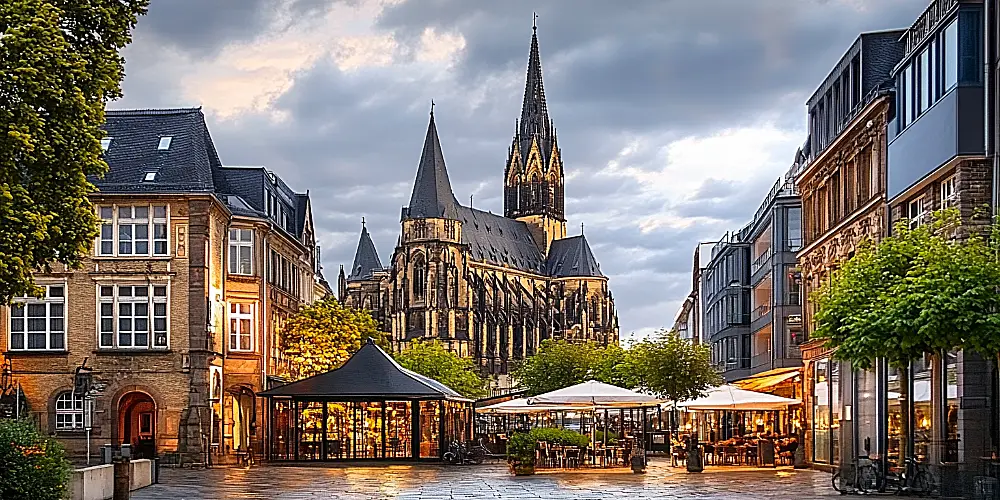
At the heart of Aachen tourism stands the magnificent Aachen Cathedral (Aachener Dom), a UNESCO World Heritage site dating back to the 8th century. This architectural marvel served as the coronation church for more than 30 German kings and is home to the shrine of Charlemagne, making it an essential stop for history enthusiasts.
Beyond the cathedral, visitors should explore:
- The Treasury Chamber (Domschatzkammer), housing one of Europe’s most important collections of medieval church treasures
- The historic Town Hall (Rathaus), built on the foundations of Charlemagne’s palace
- Elisenbrunnen, an elegant neoclassical building with thermal springs
- Ponttor and Marschiertor, the remaining medieval city gates that offer a glimpse into Aachen’s past
The city center’s charming streets are perfect for leisurely walks, with numerous cafés where you can sample Aachen’s famous Printen cookies – a local specialty that dates back centuries.
Westwall Tours and Historical Sites
For those specifically interested in exploring the Westwall around Aachen, several specialized tours provide in-depth historical context. The Westwall Museum Irrel offers guided excursions to bunker systems and fortifications in the region, with knowledgeable guides explaining the strategic importance of these structures during World War II.
Other Westwall-related sites near Aachen include:
- The Dragon’s Teeth anti-tank obstacles (Höckerlinie) visible in several locations around the city
- Bunker remains in the Aachen Forest (Aachener Wald)
- The Hürtgenwald area, site of one of the longest battles fought on German soil
Many visitors find that combining these historical sites with a local guide provides the most enriching experience, as many Westwall structures are unmarked or difficult to interpret without expert knowledge.
Museums and Educational Resources
To deepen your understanding of Aachen’s complex history, including the Westwall period, several museums offer excellent exhibits:
- Centre Charlemagne: This modern museum presents Aachen’s history from Roman times through the present day, including exhibits on the city during World War II.
- Ludwig Forum for International Art: While focused on contemporary art, the building itself is a repurposed umbrella factory with historical significance.
- Newspaper Museum: Offers insights into how media portrayed historical events, including the construction and impact of the Westwall.
The Aachen Tourist Information Center provides specialized brochures and maps highlighting historical walking routes that include Westwall remnants. They can also arrange private tours with historians who specialize in this period.
Practical Travel Information
When planning your Aachen tourism adventure, consider these practical tips:
- Best time to visit: Spring (April-June) and early autumn (September-October) offer pleasant weather for exploring outdoor historical sites.
- Accommodation: The city center has numerous hotels within walking distance of major attractions, while rural accommodations near the Belgian and Dutch borders provide easier access to some Westwall sites.
- Transportation: Aachen has excellent public transportation, but renting a car is recommended for exploring Westwall sites in the surrounding countryside.
- Multi-day passes: The Aachen 24h Ticket offers free public transportation and discounted entry to many attractions.
Combining History with Modern Experiences
Aachen tourism isn’t just about historical sites. The city offers a vibrant blend of past and present. After exploring the Westwall remnants, visitors can enjoy:
- Relaxing in Carolus Thermen, a modern spa complex drawing on Aachen’s thermal spring traditions
- Shopping in the pedestrianized old town, featuring both international brands and local artisans
- Sampling regional cuisine at restaurants ranging from traditional German fare to international options
- Attending cultural events, particularly during the annual Charlemagne Prize ceremonies or the Christmas market season
Many tourists find that alternating between historical exploration and modern amenities creates the most satisfying travel experience.
Responsible Tourism at Historical Sites
When visiting Westwall remnants around Aachen, practice responsible tourism:
- Stay on marked paths, as some areas may contain unexploded ordnance
- Respect memorial sites as places of historical significance rather than mere tourist attractions
- Consider the complex historical context of these structures, which represent a difficult period in German history
- Support local conservation efforts through donations or by using official guides
By approaching these sites with respect and a desire to learn, visitors contribute to preserving this important historical landscape for future generations.
Aachen’s unique position at the intersection of German, Belgian, and Dutch borders makes it an ideal base for exploring not just the Westwall but also the broader historical context of Western Europe. Whether you’re a history enthusiast, cultural explorer, or simply looking for a distinctive travel experience, Aachen tourism offers a remarkable journey through time while providing all the comforts of a modern European destination.
Conclusion: The Westwall Around Aachen – Where History Meets Imagination
As we’ve journeyed through the fascinating landscape of the Westwall around Aachen, we’ve uncovered layers of history that continue to resonate today. These concrete remnants stand as silent witnesses to one of history’s darkest chapters, yet also serve as powerful reminders of the resilience of the human spirit.
Historical Significance Revisited
The Westwall, with its network of bunkers, dragon’s teeth tank barriers, and fortifications, represents far more than just military architecture. It embodies Hitler’s desperate attempt to create an impenetrable defense line, a physical manifestation of the Third Reich’s paranoia and aggression. Yet today, these crumbling structures have transformed into something entirely different – educational landmarks that help us understand and process our complex past.
In Aachen specifically, the Westwall takes on special significance. This ancient city, once Charlemagne’s capital, found itself at the crossroads of history again during World War II. The juxtaposition of medieval heritage against Nazi fortifications creates a unique historical tapestry that few other European locations can match.
Where Fantasy Meets Reality
Our exploration of time travel concepts throughout this blog post isn’t merely whimsical thinking. When we stand before these weathered bunkers, we are, in a very real sense, time travelers ourselves. We peer through windows to the past, imagining the soldiers who once manned these positions, the civilians whose lives were forever altered, and the momentous decisions that shaped our modern world.
And what of our dragons? These mythical creatures serve as powerful metaphors for the monstrous ideologies that once swept across Europe. The concrete dragon’s teeth that still dot the landscape around Aachen were designed to stop tanks, but they also remind us of humanity’s capacity to create – and ultimately defeat – terrible forces of destruction.
The Westwall Today: A Living Museum
The Westwall around Aachen has evolved from military infrastructure to open-air museum. Each bunker, each barrier, each remaining fragment tells a story that deserves to be heard. These are not merely remnants of Hitler’s regime; they are educational tools that help new generations understand the consequences of totalitarianism and war.
Many sections have been thoughtfully preserved and contextualized with informational displays. Others have been reclaimed by nature, with trees and vegetation slowly enveloping concrete structures in a poetic demonstration of healing and renewal.
Beyond the Physical Remains
What makes the Westwall around Aachen truly significant isn’t just its physical presence but the conversations it continues to inspire. These sites prompt important discussions about:
- The dangers of unchecked militarism and nationalism
- The importance of remembering history accurately
- The process of national reconciliation and healing
- The transformation of places of conflict into spaces for education and reflection
Through preservation efforts, educational programs, and thoughtful tourism, these difficult historical sites have become valuable resources for understanding our shared past.
Experiencing the Westwall Firsthand
There’s simply no substitute for experiencing these historical sites in person. Walking among the dragon’s teeth tank barriers, stepping inside a preserved bunker, or following the line of the Westwall through forests and fields provides a visceral connection to history that books and photographs alone cannot convey.
Aachen itself offers the perfect base for exploring this fascinating historical landscape. The city combines stunning medieval architecture, world-class museums, and easy access to Westwall sites in the surrounding countryside. Guided tours are available that provide expert context and interpretation, helping visitors understand what they’re seeing and why it matters.
We encourage you to visit Aachen and explore the Westwall sites yourself. Walk in the footsteps of history, touch the concrete remnants of a troubled past, and form your own connection to these powerful places of memory. In doing so, you’ll gain not just historical knowledge but a deeper understanding of how the past continues to shape our present and future.
The Westwall around Aachen stands as a testament to both humanity’s capacity for destruction and our equally powerful ability to learn, remember, and grow. By preserving and thoughtfully interpreting these sites, we ensure that history’s most important lessons are never forgotten.












0 Comments