
Moving to Germany as part of NATO Air Base Geilenkirchen (GK) is an exciting experience, but it comes with a unique set of rules, regulations, and cultural differences that every newcomer should understand. Whether you are a military member, civilian employee, or contractor, understanding your legal status, tax relief benefits, law enforcement, healthcare, working rights, and cultural norms will make your transition smoother.
This guide provides an essential overview of living in Germany, including legal requirements, security, employment regulations, public holidays, climate, and driving rules. It’s just one of many guides, so don’t forget to sign up for news and updates.
1. Legal Status for NATO Personnel in Germany
As a member of the NATO Airborne Early Warning & Control Force (NAEW&CF), your legal status in Germany is determined by the NATO Status of Forces Agreement (SOFA), which governs military and civilian personnel stationed at NATO Air Base Geilenkirchen.
📜 Key Points About Your Legal Status
✔ SOFA Agreement – Grants specific rights and privileges to NATO personnel and their families.
✔ No Need for a German Visa – If you are assigned to NATO GK, your NATO orders serve as your legal residency document.
✔ SOFA Certificate Required – This is issued to military families and dependents, allowing them to stay in Germany.
✔ German Laws Apply – While SOFA provides exemptions, you must follow German laws, including taxation, registration, and driving rules.
💡 Important: Always carry your NATO ID card and national ID when traveling outside the base, especially if stopped by German authorities.
2. Law Enforcement and Military Police
German Law Enforcement (Polizei)
Germany has strict law enforcement and high security standards. If you need assistance, the German police (Polizei) can be contacted by dialing 110 (for emergencies).
✔ Traffic enforcement is strict – Speeding and parking violations carry high fines.
✔ Alcohol limit for driving is 0.05% BAC – For military personnel, it’s 0.00% while on duty.
✔ German police can issue on-the-spot fines – Be prepared to pay immediately (bank card – ECS) if caught violating laws.
Military Police on Base
NATO Air Base Geilenkirchen has its own Military Police (MP) unit, responsible for:
✔ Base security and law enforcement
✔ Military Police can perform customs duties
✔ Traffic control and driving violations on base
✔ Investigating incidents involving NATO personnel
📞 Important Contacts:
- German Police (Polizei): ☎ 110
- Medical and Fire Emergency: ☎ 112
- Base Security & Military Police: ☎ +49 2451 63 2222
💡 Tip: If you are stopped by German police off-base, remain polite and cooperative and provide your NATO ID.
3. Tax Relief and Levies for NATO Personnel
One of the most significant advantages of being a NATO employee in Germany is the tax benefits and duty-free privileges provided under the SOFA agreement.
Tax Relief (VAT Exemption) for NATO Personnel
✔ NATO personnel are exempt from paying German sales tax (Mehrwertsteuer or VAT).
✔ VAT rates in Germany: 19% (standard) & 7% (reduced on food and books).
✔ To claim tax-free purchases, request a VAT exemption form (Abwicklungsschein) from the VAT office on base, especially before making large purchases, to confirm that the exemption applies to the products.
Taxes & Levies You Must Pay
🚗 Vehicle-related taxes:
✔ Annual road tax (Kfz-Steuer) – Based on vehicle emissions and engine size.
✔ Vehicle insurance is mandatory – You must have third-party liability insurance (Haftpflichtversicherung).
🏠 Housing-related taxes:
✔ Utility levies – Water, waste disposal, and energy costs are subject to German service fees.
✔ Radio & TV License Fee (Rundfunkbeitrag) – mandatory for every household, but I suggest sending a request to exempt – just a good suggestion 😉
💡 Tip: If you purchase electronics, furniture, or high-value items, use a VAT-exempt form to save up to 19% on purchases!
4. Health, Environment, and Safety in Germany
Healthcare for NATO Personnel
Germany has one of the best healthcare systems in the world. As NATO personnel, you may be covered under:
✔ Military medical facilities on base (for active-duty personnel).
✔ TRICARE or private insurance plans (for dependents and civilians).
✔ Local German healthcare system, if authorized.
🏥 Emergency Medical Care:
✔ Call 112 for an ambulance in life-threatening situations.
✔ Closest German hospitals:
- St. Elisabeth Hospital, Geilenkirchen
- Uniklinik RWTH Aachen (Large University Hospital)
Environmental Awareness in Germany
Germany is highly eco-conscious and follows strict recycling and environmental protection laws.
✔ Recycling is mandatory – Separate paper, plastic, glass, and organic waste.
✔ Use of reusable bags is encouraged – Most supermarkets charge for plastic bags.
🚨 Safety Rules:
✔ Strict fire and safety regulations – Smoke detectors are mandatory.
✔ Winter tire requirement – Snow tires (Winterreifen) are not always legally required but are recommended from November to April.
💡 Tip: German law does not specify a minimum temperature or a fixed period during which vehicles must be equipped with winter tires. Instead, drivers are required to adjust their tires based on weather conditions. Winter tires are mandatory when driving on black ice, packed snow, slush, glaze, or slippery frost.
✔ Tread Depth & Installation
- Winter tires must have a minimum tread depth of 1.6 mm.
- They must be installed on all four wheels of the vehicle.
- Motorcycles are exempt from the winter tire requirement.
✔ Winter Tire Labeling Requirements
Tires displaying both the M+S and Alpine symbols remain valid for winter use beyond this deadline. As of January 1, 2018, all new winter tires must be labeled with the Alpine symbol (mountain and snowflake). Winter tires with only the M+S (Mud & Snow) symbol will no longer be permitted in winter road conditions after October 1, 2024.

✔ All-Season Tire Regulations & Penalties in Germany
- All-season tires with the Alpine symbol (mountain and snowflake) are classified as winter tires and are permitted for use in winter conditions.
- All-weather tires marked only with the M+S (Mud & Snow) symbol will no longer be allowed in winter weather conditions starting October 1, 2024.
- All-weather tires displaying both the M+S and Alpine symbols remain valid for winter use beyond this date.
✔ Fines & Legal Consequences
- Both the vehicle owner and the driver are subject to penalties for non-compliance.
- Driver fines:
- €60 to €120 fine and 1 point in the German driving ability register (FAER), depending on the severity of the offense.
- Owner fines:
- €75 fine and 1 point in the FAER register.
✔ Insurance Implications
Failure to equip your vehicle with proper winter tires may result in insurance complications. In the event of an accident—whether caused by you or a third party—your insurance company may limit or deny coverage if your vehicle was not fitted with appropriate tires for the conditions. Similar situation is with the motorcycle riders who don’t wear protective clothes. More on this in a new guide.
REMEMBER – regulations have a tendency to change in time 😉
Stay tuned to find out what to do around Geilenkirchen!
If you’re looking for more information about what to do around Geilenkirchen, stay tuned! We are currently preparing a special catalog filled with detailed guides, hidden gems, and unique experiences to help you make the most of your visit. Whether you’re interested in historical sites, nature excursions, sport activities, family centers, or cultural events, this online catalog will be your go-to resource for discovering the best of the region.
📌 Bookmark this page and share it with friends so you don’t miss our upcoming updates!
5. Working in Germany
If you are a military spouse or dependent, you may be eligible to work in Germany. You can also consider running your own business, starting with a simple side hustle.
Employment Rules for NATO Dependents
✔ You may need a German work permit, depending on your status under SOFA.
✔ NATO civilians can apply for local jobs on base (e.g., administration, security, retail).
✔ Spouses can work in the German economy, but may have to pay German taxes.
Job Opportunities for English Speakers
✔ NATO Jobs & Base Employment – Check NATO’s hiring portal.
✔ Teaching English – Many international schools and language centers hire native English speakers.
✔ Remote & Freelance Work – Germany has finally quite good internet infrastructure, making it easy for remote jobs.
6. German Holidays and Celebrations
Germany celebrates many public holidays, which vary by state. In North Rhine-Westphalia, the main holidays include:
📅 Major Public Holidays:
✔ New Year’s Day (Neujahr) – January 1
✔ Easter (Ostern) – March/April
✔ Labor Day (Tag der Arbeit) – May 1
✔ Christmas Eve & Christmas (Weihnachten) – December 24-26
🎭 Popular German Celebrations:
✔ Karneval (Carnival) – February – A huge festival with costumes, parades, and parties.
✔ Oktoberfest – September/October – Beer, food, and Bavarian traditions.
✔ Christmas Markets (Weihnachtsmärkte) – December – Festive markets across Germany.
7. Climate, Currency, and Driving Rules
Weather & Climate in Geilenkirchen
✔ Winters (Nov-Feb) – Cold, average temperatures -2°C to 5°C.
✔ Summers (June-August) – Warm, with highs around 25°C.
✔ Rain is common year-round – Always carry an umbrella!
Currency & Payments
✔ Germany uses the Euro (€).
✔ Most shops accept cash, debit cards (EC-Karte), and credit cards.
✔ Contactless payments (Apple Pay & Google Pay) are widely used.
Driving Rules in Germany
✔ Speed Limits:
- Autobahn (No official limit but recommended 130 km/h). Be cautious, as some areas of the Autobahn have temporary speed limits and many times speed cameras.
- City roads: 50 km/h, Residential areas: 30 km/h.
✔ Seatbelts & child seats are mandatory.
✔ Headlights must be on in foggy or rainy conditions.
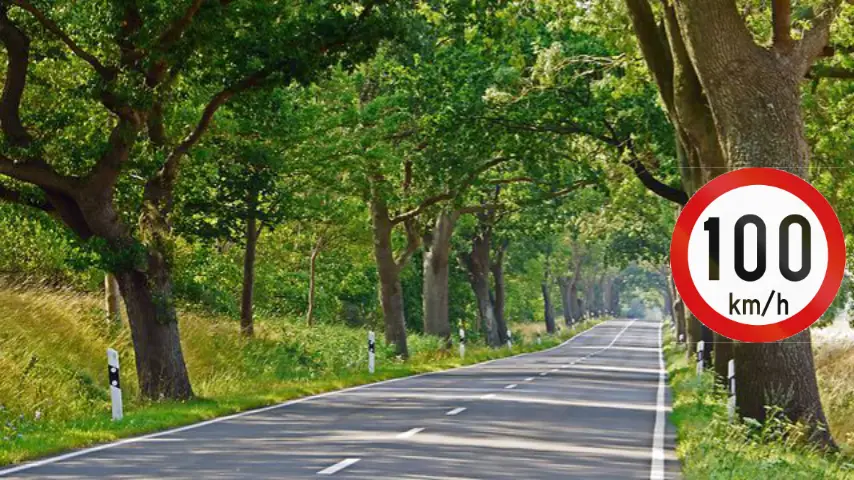
In Germany, roads running through open countryside, including those among fields, typically fall under the general rural road (Landstraße) speed regulations unless otherwise posted. The following limits apply:
✔ Standard Speed Limit on Rural Roads (Landstraßen):
- 100 km/h (62 mph) for cars, motorcycles, and vehicles up to 3.5 tons
- 80 km/h (50 mph) for vehicles over 3.5 tons (trucks, buses, trailers)
✔ Exceptions & Special Cases:
- If visibility is poor (fog, heavy rain, or snow) and visibility drops below 50 meters, the speed limit is 50 km/h.
- Agricultural roads (small roads primarily for farm use) often have lower speed limits, typically 30-50 km/h, and may be restricted to local traffic.
- Sharp turns, intersections, or wildlife crossings may have posted limits below 100 km/h, which must be obeyed.
🚨 Important: Unlike the Autobahn, rural roads always have speed limits, and overtaking on single-lane roads requires extra caution due to blind spots and agricultural vehicles.
💡 Tip: Many people have problems with tickets for more than just speeding. Therefore, we will make a unique guide to keep you safe.
Final Thoughts: Welcome to Germany!
Living in Germany as a NATO employee, contractor, or military family is an exciting and rewarding experience. Understanding the legal framework, security rules, tax benefits, and cultural differences will help you transition smoothly and enjoy life in Geilenkirchen.
📍 For more resources, visit the “Here at GK” portal for housing, employment, and community support.
🇩🇪 Willkommen in Deutschland! 🎉











0 Comments