
What if one battle could change the course of history? The Battle of Geilenkirchen was more than just a clash of forces—it was a turning point that shaped the Allied advance into Germany during WWII.
Key Takeaways
- Geilenkirchen, a small German town near the Dutch border, played a pivotal role in World War II due to its strategic location along the Siegfried Line, a key defensive barrier for Nazi Germany.
- The Battle of Geilenkirchen, codenamed Operation Clipper, began on November 18, 1944, and marked the first German town on the western front to fall to Allied forces.
- The operation was a joint effort between American and British forces, with the U.S. 84th Infantry Division operating under British XXX Corps, showcasing effective multinational military cooperation.
- Geilenkirchen’s capture breached the Siegfried Line, providing a gateway to the Roer River plain and Germany’s industrial heartland, while also delivering a psychological blow to German morale.
- The battle was fought under challenging weather conditions, including heavy rain and mud, which hampered mobility and required innovative tactics such as the use of specialized armored vehicles like “Crocodiles” equipped with flamethrowers.
- The civilian population of Geilenkirchen suffered greatly, with many evacuated and those remaining enduring artillery bombardments, aerial attacks, and street-to-street fighting. The town was left heavily damaged, with significant loss of life and infrastructure.
- The battle provided valuable lessons in urban combat, breaking fortified positions, and maintaining supply lines, which influenced subsequent Allied operations in Germany.
- Geilenkirchen’s strategic importance extended beyond the battle, as its capture facilitated Allied logistics and set the stage for further advances toward the Rhine River and Berlin.
- The battle highlighted the adaptability of Allied forces in overcoming fortified defenses and adverse conditions, contributing to the eventual defeat of Nazi Germany.
- Today, Geilenkirchen preserves its WWII history through museums, memorials, and educational programs, ensuring the legacy of the battle and its impact on the region is remembered.
Table of Contents
- Key Takeaways
- Introduction to Geilenkirchen WWII
- Historical Context of WWII Battles in Germany
- Strategic Importance of Geilenkirchen in WWII
- Key Events and Statistics of the Battle of Geilenkirchen
- Experiences of Soldiers and Civilians
- Impact on the Region and People
- Educational and Tourism Aspects
- Introduction to Geilenkirchen Tour and Museum
- Historical Sites to Visit
- Tips for Travelers and Students of History
- Overview of Geilenkirchen History and WWII Significance
- Military History and Relevance
- Research Findings and Statistics
- Conclusion: Geilenkirchen’s Enduring WWII Legacy
Introduction to Geilenkirchen WWII
Nestled in western Germany near the Dutch border, Geilenkirchen emerged as a critical location during World War II that would forever change the course of the conflict. The Geilenkirchen WWII story represents a fascinating yet often overlooked chapter in the larger narrative of the Second World War. This small German town, with its strategic position along the Siegfried Line (also known as the West Wall), became a focal point for Allied forces as they pushed into Nazi Germany in late 1944.
The town’s geographical location made it an essential target. Situated in North Rhine-Westphalia, Geilenkirchen sat at a critical junction that controlled access to the Roer River plain and ultimately the path into the German industrial heartland. Military historians note that controlling this area was crucial for the Allied advance into Germany, as it provided a gateway through Germany’s western defensive fortifications.
Geilenkirchen’s significance extended beyond mere geography. The town was heavily fortified as part of Hitler’s defensive strategy, with concrete bunkers, anti-tank obstacles, and extensive minefields protecting the approach. These defenses were part of the larger Siegfried Line that stretched approximately 390 miles along Germany’s western border, designed to impede Allied progress after the fall of France.
The Battle of Geilenkirchen: A Critical Engagement
The Battle of Geilenkirchen, code-named Operation Clipper, began on November 18, 1944, as part of the larger Allied push toward the Rhine River. This battle marked a significant milestone as it was the first German town on the western front to fall to Allied forces. The operation involved a coordinated attack by American and British forces, representing one of the war’s notable examples of cross-national military cooperation.
What made this battle particularly noteworthy was its unique position in the Allied command structure. It was the first time in the European Theater that American forces were placed under British command, with the U.S. 84th Infantry Division (the “Railsplitters”) operating under the British XXX Corps. This collaborative approach would later serve as a model for future joint operations.
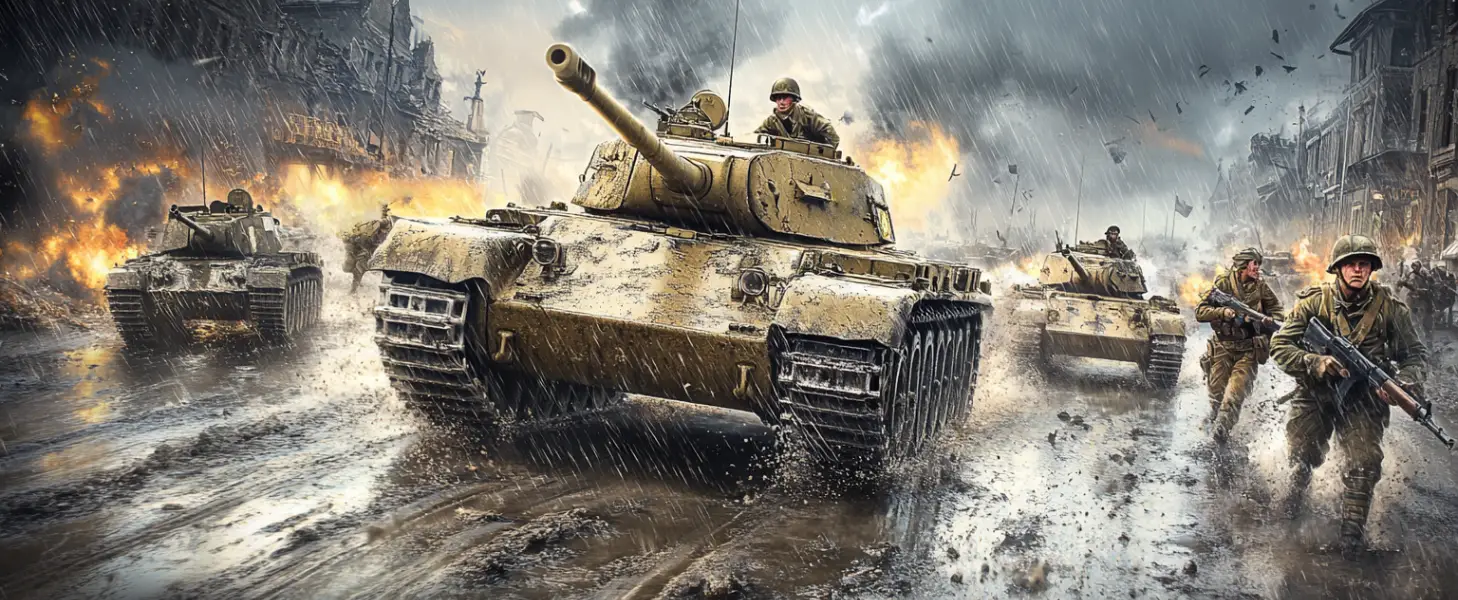
The fighting was intense and costly. Allied forces faced not only strong German defenses but also challenging weather conditions. Heavy rainfall had turned the battlefield into a muddy quagmire, significantly hampering the movement of tanks and other vehicles. Despite these obstacles, the Allied forces persevered, employing innovative tactics including specialized armored vehicles known as “Crocodiles” that used flamethrowers to clear German bunkers.
Broader Implications of the Geilenkirchen Campaign
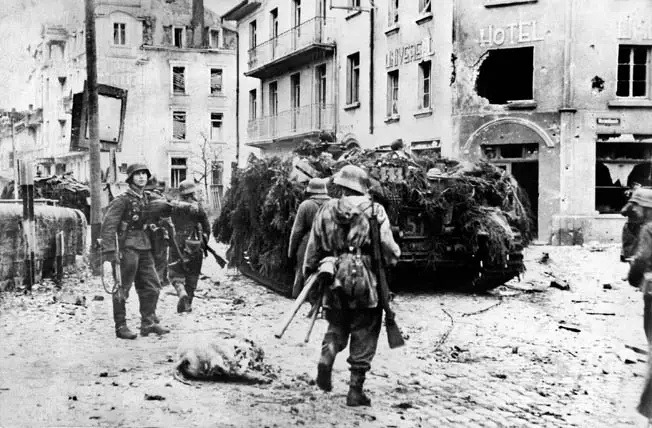
The battle for Geilenkirchen had far-reaching consequences beyond the immediate military objectives. For the German military, it represented another crack in the supposedly impenetrable Siegfried Line, dealing a psychological blow to German morale. For Allied forces, it provided valuable experience in urban combat and breaking through fortified positions – lessons that would prove invaluable as they continued their push into Germany.
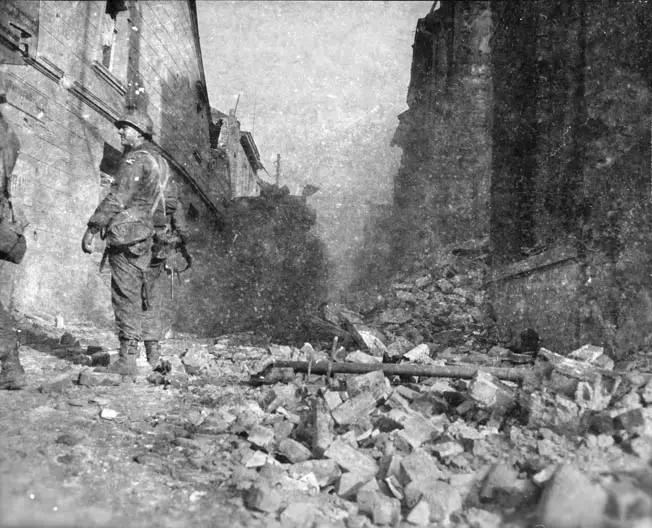
The civilian population of Geilenkirchen also bore the heavy burden of this conflict. Before the battle, many residents were evacuated, but those who remained endured artillery bombardment, aerial attacks, and street-to-street fighting. The town itself suffered extensive damage, with many historic buildings reduced to rubble. This human cost of war is often overshadowed by strategic and tactical discussions but remains an essential part of understanding the full impact of the Geilenkirchen campaign.
From a logistical perspective, securing Geilenkirchen helped solve supply problems for the advancing Allied armies. The capture of intact road networks and railway lines facilitated the movement of troops, equipment, and provisions needed to maintain momentum toward the Rhine and eventually Berlin.
Geilenkirchen played a pivotal role in WWII, with significant impacts on both the war and the region. As a critical defensive position along the Siegfried Line, its capture marked a turning point in the Allied advance into Germany. The battle demonstrated the effectiveness of combined operations between American and British forces, setting a precedent for future military cooperation. Moreover, the lessons learned during this engagement—about urban warfare, breaking fortified positions, and maintaining supply lines—would influence military doctrine for years to come. Understanding the story of Geilenkirchen provides valuable insights into not just a single battle, but the broader strategies and challenges that defined the final phases of World War II in Europe.
Historical Context of WWII Battles in Germany
As World War II progressed into its final stages, Germany found itself increasingly on the defensive. By late 1944, the Allied forces had successfully landed in Normandy and were pushing eastward toward the German border. This shift in momentum set the stage for numerous WWII battles in Germany that would ultimately determine the outcome of the European theater.
The war had begun in September 1939 when Nazi Germany invaded Poland, triggering declarations of war from France and Great Britain. For nearly five years, the conflict had raged across Europe, North Africa, and the Pacific. By mid-1944, however, the tide had definitively turned against Hitler’s forces.
The Western Front Advances
Following the successful D-Day landings on June 6, 1944, Allied forces steadily pushed through France. By September, they had liberated Paris and were approaching Germany’s western border. The Allied strategy involved a broad front advance toward Germany, with British and Canadian forces in the north, American forces in the center, and more American and French forces in the south.
This advance wasn’t without significant challenges. In September 1944, Operation Market Garden, an ambitious Allied airborne assault in the Netherlands, failed to achieve its objective of securing a crossing over the Rhine River. This setback temporarily slowed the Allied momentum.
Meanwhile, German forces were preparing defensive positions along their western border. The most formidable of these was the Siegfried Line (known to Germans as the Westwall), a series of bunkers, tunnels, and tank traps stretching along Germany’s western frontier.
The Siegfried Line Campaign
By October 1944, Allied forces had reached the Siegfried Line at several points. Breaking through this defensive barrier became a critical objective. The campaign to breach the Siegfried Line would involve numerous smaller battles and operations, including the Battle of Aachen, the first major German city to fall to American forces.
The Allied approach to the Siegfried Line was complicated by several factors:
- Weather conditions – Autumn rains made roads muddy and difficult to traverse
- Supply challenges – Allied supply lines were stretched thin after the rapid advance through France
- Renewed German resistance – Defending their homeland, German forces fought with increased determination
- Terrain advantages – The Germans utilized rivers, forests, and hills as natural defensive positions
The Rhineland Campaign
The broader military operation that encompassed the battle for Geilenkirchen was known as the Rhineland Campaign. This campaign aimed to clear German forces from the area between the Siegfried Line and the Rhine River, setting the stage for a final push into Germany’s industrial heartland.
The Rhineland Campaign involved several phases:
- Initial breaching of the Siegfried Line (September-October 1944)
- Battles for key towns and transportation hubs (November-December 1944)
- Clearing operations between the Roer and Rhine Rivers (February-March 1945)
During this period, Allied forces faced not only determined German resistance but also one of the worst European winters in decades. The harsh weather conditions slowed operations and caused additional hardships for troops on both sides.
Operation Clipper and Geilenkirchen
Within this broader context, Geilenkirchen emerged as a strategically important objective. Located in western Germany near the Dutch border, the town sat on a small salient (a piece of land that projects into enemy territory) in the Siegfried Line. Its position made it a natural target for Allied operations.
Operation Clipper, launched in November 1944, was specifically designed to capture Geilenkirchen and straighten the Allied front line. This operation was notable for being the first time British and American forces fought under a unified command structure in this sector.
The town’s significance stemmed from several factors:
- Its position as a transportation hub with road and rail connections
- Its role as a communications center for German forces
- Its location on elevated ground providing observation advantages
- Its position as a salient in the Siegfried Line that could be used as a jumping-off point for further advances
German Defensive Preparations
By late 1944, the German military was increasingly relying on a mix of veteran soldiers, hastily trained recruits, and Volkssturm (people’s militia) units. Despite these limitations, they prepared formidable defenses around Geilenkirchen.
The German defensive strategy included:
- Extensive minefields and barbed wire obstacles
- Anti-tank ditches and concrete bunkers
- Pre-registered artillery positions targeting likely avenues of approach
- Mobile reserves ready to counterattack any Allied breakthrough
According to military historians, the German forces in the Geilenkirchen area belonged primarily to the 183rd Volksgrenadier Division, a unit that had been reconstituted after heavy losses on the Eastern Front. While not at full strength, these troops were determined to defend German soil.
The Strategic Importance
The battle for Geilenkirchen must be understood within the larger strategic picture of late 1944. Allied planners were already looking beyond the Siegfried Line toward the Rhine River, Germany’s last major natural defensive barrier in the west. Clearing operations like those at Geilenkirchen were essential prerequisites for the eventual Rhine crossings that would occur in March 1945.
As the Allies approached the German border, political considerations also came into play. The capture of German territory had psychological importance, demonstrating to both German civilians and military leaders that the war was now being fought on their soil.
The historical context surrounding the Battle of Geilenkirchen illustrates how this seemingly small engagement fit into the broader tapestry of WWII battles in Germany that would ultimately lead to the Nazi regime’s defeat in May 1945.
Strategic Importance of Geilenkirchen in WWII
Geilenkirchen, a small German town near the Dutch border, emerged as a location of significant strategic importance during World War II. The town’s position in the Rhineland region made it a critical point in Germany’s defensive strategy, particularly as Allied forces pushed eastward following the D-Day landings in 1944.
Geographic Significance in German Defense
The strategic value of Geilenkirchen stemmed primarily from its location. Situated just east of the Netherlands in North Rhine-Westphalia, the town formed part of the outer defensive perimeter of the Siegfried Line (also known as the West Wall). This elaborate defensive system stretched approximately 390 miles along Germany’s western border and represented Hitler’s attempt to create an impenetrable barrier against Allied advances.
Geilenkirchen’s position was particularly valuable because:
- It controlled access to the Roer River plain, a critical pathway into Germany’s industrial heartland
- The town sat at the junction of several important transportation routes
- Its elevated terrain provided natural defensive advantages
- It served as a forward position protecting larger German cities further east
As Allied forces moved through France and Belgium in late 1944, Geilenkirchen’s significance increased dramatically. The town became one of the first major German settlements that would need to be captured during the Allied push into Germany proper.
Part of the Siegfried Line Defense System
Within the broader context of Geilenkirchen Germany history, the town’s integration into the Siegfried Line was perhaps its most significant military aspect. The defensive fortifications around Geilenkirchen included:
- Concrete bunkers with walls up to 11 feet thick
- Anti-tank obstacles known as “dragon’s teeth”
- Extensive trench systems and minefields
- Interlocking fields of fire from strategically placed machine gun nests
These defenses transformed the otherwise unremarkable town into a formidable military strongpoint. German military planners recognized that holding positions like Geilenkirchen would be essential to slowing the Allied advance and preventing a rapid collapse of the western front.
Command and Control Hub
Beyond its physical defenses, Geilenkirchen served as an important command and control center for German forces in the region. Military historians have noted that the town housed communication facilities that coordinated defensive efforts across a significant portion of the Siegfried Line.
German commanders utilized Geilenkirchen’s sturdy municipal buildings and underground facilities to establish headquarters that could withstand Allied bombardment. These command centers directed troop movements, artillery fire, and counterattacks across the broader front.
Gateway to the Roer River and Beyond
The Geilenkirchen battle significance was amplified by what lay beyond it. Allied military planners understood that capturing the town would open access to:
- The Roer River valley, a natural pathway into Germany
- The Cologne Plain, leading toward major population centers
- Industrial areas vital to Germany’s war production
- Transportation networks supplying German forces on the western front
As noted by military historian Charles B. MacDonald, “The capture of Geilenkirchen would not only breach the Siegfried Line but would provide a springboard for further advances into the German heartland.”
Psychological Importance
The strategic importance of Geilenkirchen extended beyond purely military considerations. As one of the first German towns to face direct assault, it held significant psychological value for both sides:
- For German forces, Geilenkirchen represented the defense of the homeland itself
- For Allied troops, capturing the town would demonstrate that Germany’s vaunted defenses could be broken
- For German civilians, the battle would signal whether Hitler’s promises of impregnable defenses were valid
- For Allied leadership, success at Geilenkirchen would validate their strategy of direct confrontation with the Siegfried Line
Resource Allocation Significance
The battle for Geilenkirchen also forced both sides to make critical decisions about resource allocation. German high command had to determine how many troops and how much equipment to commit to the town’s defense, knowing that resources were increasingly scarce as the war progressed.
Similarly, Allied planners had to decide whether Geilenkirchen warranted a major offensive or if resources would be better directed elsewhere. The fact that Operation Clipper (the Allied offensive to capture Geilenkirchen) was launched in November 1944 demonstrates the town’s perceived importance to the overall campaign.
Conclusion: A Pivotal Point in the Western Front
While not as famous as battles like Stalingrad or Normandy, the struggle for Geilenkirchen represented a critical juncture in the Western Front campaign. The town’s strategic location, its integration into Germany’s defensive systems, and its control of access routes to the German interior all contributed to its significance.
Understanding the Geilenkirchen battle significance helps illuminate why this seemingly small town became the focus of intense fighting and why both sides committed substantial resources to its capture or defense. As the war in Europe moved toward its conclusion, places like Geilenkirchen would prove to be the keys that unlocked Germany’s western defenses and hastened the end of the conflict.
Key Events and Statistics of the Battle of Geilenkirchen
The Battle of Geilenkirchen stands as one of the significant confrontations during the later stages of World War II. This battle, which took place in November 1944, marked a crucial point in the Allied push into Germany. Let’s explore the major events, strategies, and outcomes that defined this important WWII engagement.
Initial Assault and Operation Clipper
The battle began on November 18, 1944, as part of the broader Operation Clipper. This offensive was designed to clear German forces from the area west of the Roer River. The primary objective was to capture Geilenkirchen, a small German town that held strategic importance due to its position within the Siegfried Line (also known as the West Wall) defenses.
The Allied forces assigned to this mission included:
- The British XXX Corps
- The American 84th Infantry Division (nicknamed the “Railsplitters”)
- Elements of the 43rd Wessex Division
This operation was notable as it represented the first time British forces commanded American troops in combat during WWII in Europe.
Weather Conditions and Terrain Challenges
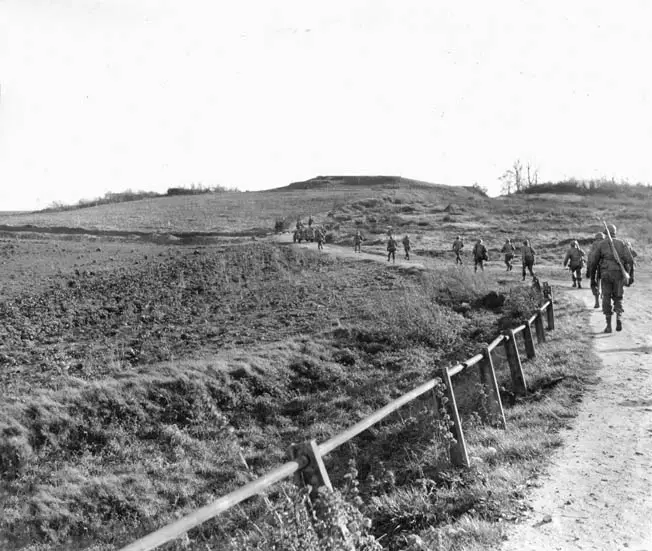
The battle took place under extremely difficult conditions. Heavy rainfall had turned the battlefield into a muddy quagmire, significantly hampering movement. Military historians note that tanks and other vehicles frequently became stuck in the mud, forcing soldiers to advance on foot through difficult terrain.
Temperatures hovered just above freezing, creating miserable conditions for troops on both sides. The weather not only affected mobility but also visibility, with fog and rain limiting air support options for the Allied forces.
Strategic Importance of Geilenkirchen
Geilenkirchen’s significance stemmed from several factors:
- It was situated on high ground that provided observation points over surrounding areas
- The town served as a communication hub with road and rail connections
- It formed part of the Siegfried Line’s defensive network
- Capturing it would create a gap in German defenses for future operations
Troop Movements and Battle Progression
The battle unfolded in several distinct phases:
Phase 1: Initial Bombardment
Before ground troops moved in, Allied forces conducted an extensive artillery bombardment. According to military records, more than 10,000 shells were fired at German positions around Geilenkirchen within a 24-hour period. Additionally, RAF bombers targeted key defensive positions to soften resistance.
Phase 2: Ground Assault
The ground assault began with the 84th Infantry Division attacking from the west while British forces secured their flanks. The American forces were divided into two battle groups:
- Task Force A moved toward Prummern
- Task Force B advanced directly on Geilenkirchen
The 334th Infantry Regiment led the direct assault on the town, while the 333rd secured the surrounding areas.
Phase 3: House-to-House Fighting
Once inside the town, Allied troops engaged in intense house-to-house combat. German defenders had fortified buildings and created interlocking fields of fire. This phase of the battle was particularly costly in terms of casualties. Historical accounts describe soldiers clearing buildings room by room, often using grenades and close-quarters combat techniques.
Statistical Overview of the Battle
The Battle of Geilenkirchen resulted in significant casualties on both sides:
- Allied Casualties: Approximately 1,800 (including killed, wounded, and missing)
- German Casualties: Estimated at 1,200 (though exact figures remain disputed)
- Duration: 4 days of intense fighting (November 18-22, 1944)
- Territory Gained: Approximately 28 square kilometers
- Prisoners Taken: Allied forces captured around 800 German soldiers
Equipment and Weaponry
The battle featured a wide array of military equipment:
- Allied Armor: Sherman tanks, Churchill tanks, and tank destroyers
- German Defenses: Anti-tank guns, machine gun nests, and some Panzer IV tanks
- Artillery: Both sides employed extensive artillery support
- Air Support: Limited due to weather, but included RAF Typhoon fighter-bombers when conditions permitted
Tactical Innovations
The Battle of Geilenkirchen saw several tactical innovations worth noting:
- Combined Arms Operations: The effective coordination between infantry, armor, and artillery demonstrated evolving Allied tactics
- Flail Tanks: Specialized Sherman tanks equipped with flails to detonate mines were used to clear paths
- International Coordination: The successful integration of American and British forces under unified command
Outcome and Strategic Significance
By November 22, 1944, Allied forces had secured Geilenkirchen and surrounding areas. This victory achieved several important objectives:
- Created a breach in the Siegfried Line defenses
- Secured high ground for observation and future operations
- Demonstrated the effectiveness of combined American-British operations
- Provided valuable experience in urban combat tactics
However, the battle’s gains came at a significant cost in casualties and material. Moreover, the overall advance toward the Roer River was slower than Allied commanders had hoped, partly due to the difficult terrain and weather conditions.
Long-term Impact
The Battle of Geilenkirchen contributed to the eventual Allied victory in several ways:
- It helped refine urban combat tactics that would be used in subsequent operations
- The breach in the Siegfried Line weakened German defensive capabilities
- It demonstrated German defensive resilience, causing Allied planners to adjust their expectations for the campaign’s timeline
In the broader context of WWII, the Battle of Geilenkirchen represents one of many hard-fought engagements that incrementally pushed Allied forces closer to victory in Europe. While perhaps not as well-known as larger battles, it exemplifies the determined Allied advance into Germany during the war’s final stages.
Experiences of Soldiers and Civilians
The Battle of Geilenkirchen during World War II wasn’t just a strategic military operation—it was a deeply human experience that forever changed the lives of both soldiers and civilians caught in its path. The Geilenkirchen WWII conflict created lasting memories and scars for everyone involved.
American Soldiers’ Perspectives
For many American soldiers, Geilenkirchen represented their first major battle on German soil. Private James Wilkins of the 84th Infantry Division wrote in his journal: “The mud was everywhere. It clung to our boots, making each step a struggle. But we pushed on because we knew what was at stake.”
The weather conditions made the battle particularly challenging. Sergeant Robert Thompson recalled: “The rain never seemed to stop. Our uniforms were constantly wet, and the cold seeped into our bones. Many of us suffered from trench foot, but we couldn’t stop fighting.”
The urban combat presented unique challenges that many soldiers weren’t prepared for. Lieutenant Michael Davis described the house-to-house fighting:
“We’d clear one building only to face fire from the next. The Germans had turned ordinary homes into fortresses. Every window could hide a sniper, every doorway a machine gun nest. It was nothing like the training we’d received.”
British Forces’ Experiences
The British soldiers of the XXX Corps brought their own perspectives to the battle. Captain William Harrington of the 43rd Wessex Division noted: “The cooperation with American troops was unprecedented. Despite our different approaches to warfare, we found common ground in our determination to push back the German forces.”
Many British veterans later described the battle as a turning point in their war experience. Corporal James Bennett wrote: “After Geilenkirchen, we knew we were going to win this war. The Germans were fighting on their home soil now, and though they fought fiercely, we could sense their resolve weakening.”
German Defenders’ Stories
On the other side of the conflict, German soldiers faced the grim reality of defending their homeland. Feldwebel (Sergeant) Hans Mueller of the 176th Infantry Division later recounted: “We knew the Americans and British were coming. Our orders were to hold at all costs, but many of us wondered if the cost was too high.”
Younger soldiers, often teenagers hastily conscripted into the Volkssturm (people’s militia), found themselves in particularly desperate situations. Sixteen-year-old Kurt Weber remembered: “They gave me a Panzerfaust [anti-tank weapon] and two days of training. Then they sent me to face American tanks. I was terrified but had no choice.”
Civilian Life Under Fire
Perhaps the most poignant stories came from the civilians of Geilenkirchen. Many had lived there for generations and suddenly found their homes in the middle of a battlefield.
Maria Schneider, who was 12 years old during the battle, recalled: “We spent days in our cellar, listening to the shells exploding above us. My mother would tell us stories to drown out the noise, but nothing could hide the fear we all felt.”
The evacuation orders came suddenly for many families. Heinrich Becker, then a father of three, described the difficult choice many faced: “The authorities told us to leave, but where could we go? Some neighbors refused, saying they would rather die in their homes than become refugees.”
Those who stayed faced dire conditions. Food became scarce, and basic utilities like water and electricity were quickly knocked out by the fighting. Elderly residents were particularly vulnerable, as described by local doctor Franz Muller: “I tried to reach as many patients as I could, but moving between buildings meant risking sniper fire. Many older people died not from bullets but from lack of medicine and care.”
Aftermath and Reconciliation
In the days following the battle, as the Allied forces secured the area, a tentative relationship formed between victors and the local population. Emma Hoffman, who was 35 during the battle, remembered: “The American soldiers gave chocolate to our children. It was a small gesture, but it meant so much after all we had endured.”
Many soldiers found themselves conflicted about their role. American Corporal David Wilson wrote home: “The people here aren’t so different from us. They have the same hopes and fears. It makes you wonder about the purpose of all this destruction.”
Lasting Trauma
The psychological impact of the battle lingered long after the guns fell silent. Combat fatigue—what we now recognize as PTSD—affected countless soldiers. Staff Sergeant Thomas Kelly of the 84th Infantry Division struggled for decades with nightmares about the house-to-house fighting.
Civilians too carried the mental scars. Interviews conducted for the Geilenkirchen Historical Society in the 1970s revealed that many residents experienced anxiety, depression, and trauma responses for years after the war ended.
Preserving Personal Histories
Today, these personal accounts form a crucial part of understanding the Battle of Geilenkirchen beyond military strategies and political implications. The Geilenkirchen Museum houses an extensive collection of letters, diaries, and recorded interviews that provide intimate glimpses into this pivotal moment in history.
As historian Dr. Elsa Brandt notes, “These personal stories humanize a conflict that’s often reduced to troop movements and casualty figures. They remind us that every battle is ultimately about people—their courage, their suffering, and their resilience.”
Through these collected experiences of soldiers and civilians, we gain a more complete understanding of how Geilenkirchen became not just a pivotal WWII battlefield, but a profound human story of survival, sacrifice, and eventually, healing.
Impact on the Region and People
The Battle of Geilenkirchen during WWII left profound and lasting impacts on both the physical landscape and the people who called this German border town home. The Geilenkirchen WWII experience represents a microcosm of the broader devastation experienced throughout Europe during this global conflict.
Immediate Physical Destruction
When Allied forces launched Operation Clipper in November 1944, Geilenkirchen became the focal point of intense artillery bombardment and aerial attacks. Before ground troops even entered the town, approximately 75% of buildings had been severely damaged or completely destroyed. The town’s infrastructure was left in ruins:
- Water systems were compromised, leaving residents without clean drinking water
- Electrical grids were destroyed, plunging the region into darkness
- Roads and bridges were rendered impassable, isolating communities
- Schools, churches, and community centers were reduced to rubble
The once-picturesque town with its medieval architecture and charming streets became unrecognizable. Historical buildings dating back centuries were lost forever, erasing physical connections to the town’s rich past.
Civilian Casualties and Displacement
The human cost of the Geilenkirchen battle was severe. While exact figures remain disputed, historians estimate that between 200-300 civilians lost their lives during the fighting. Many more suffered injuries that would affect them for the rest of their lives.
Most of Geilenkirchen’s population had been evacuated before the battle began, but not everyone left. The elderly, the infirm, and those without means to travel remained behind. These residents endured:
- Constant fear of bombing and artillery
- Severe food shortages and malnutrition
- Lack of medical care for injuries and illness
- Harsh winter conditions without adequate shelter or heating
Those who did evacuate became refugees, often separated from family members and uncertain if they would ever return home. Many never did.
Post-War Recovery Challenges
After the war ended, Geilenkirchen faced enormous challenges in rebuilding. The town was located in what became the British occupation zone, and recovery was slow and difficult. Several factors complicated reconstruction efforts:
- Severe material shortages made rebuilding physically difficult
- Economic collapse meant limited financial resources for reconstruction
- Population decline as many former residents resettled elsewhere
- Unexploded ordnance made certain areas dangerous for years
The first priority was restoring basic services. Temporary housing was erected, and gradually, permanent structures replaced them. However, the town that emerged was fundamentally different from pre-war Geilenkirchen. Modern, utilitarian architecture replaced much of the historical character that had been lost.
Psychological and Social Impact
Perhaps the most enduring impact of Geilenkirchen’s WWII experience was psychological. The battle and broader war created deep trauma that affected generations:
- Survivors experienced what we now recognize as PTSD
- Children who lived through the battle carried emotional scars into adulthood
- Community bonds were fractured as families were separated or lost
- Cultural identity was challenged as historical landmarks disappeared
The social fabric of the town also changed dramatically. Many families who had lived in Geilenkirchen for generations never returned. New residents moved in during reconstruction, changing the community’s composition and character.
Economic Transformation
Before WWII, Geilenkirchen’s economy relied heavily on agriculture and small-scale manufacturing. The war’s destruction forced economic reinvention. In the post-war years, the region experienced:
- Shift away from traditional industries
- Integration into new economic structures of West Germany
- Eventual development as part of the cross-border economy with nearby Netherlands
- Later establishment of NATO Air Base Geilenkirchen, bringing new economic activity
This economic transformation brought both opportunities and challenges. While new jobs and industries emerged, traditional ways of life and livelihoods were often lost forever.
Border Region Significance
Geilenkirchen’s position near the Dutch-German border gave it special significance in post-war Europe. The battle highlighted the strategic importance of this location. After the war, the region became:
- Part of NATO’s defensive line during the Cold War
- A symbol of European border cooperation after EU formation
- A case study in cross-border recovery and development
The establishment of NATO Air Base Geilenkirchen in 1980 further cemented the town’s connection to military history, creating an interesting continuity from its WWII experience.
Cultural Memory and Commemoration
Today, the Battle of Geilenkirchen lives on in cultural memory. The town has worked to preserve and commemorate this difficult chapter in its history through:
- Memorial sites marking key battle locations
- Museum exhibits documenting civilian and military experiences
- Annual remembrance ceremonies
- Educational programs for younger generations
These efforts reflect the community’s determination to honor the past while looking toward the future. For many local families, stories of Geilenkirchen during WWII remain an important part of their identity and heritage.
Lessons for Future Generations
The impact of the battle on Geilenkirchen offers important lessons about war’s true costs. Beyond military objectives and strategic gains, the experience shows how armed conflict transforms communities in ways that persist for generations. The town’s journey from battlefield to rebuilt community demonstrates both human resilience and the profound, lasting consequences of war.
As time passes and fewer direct witnesses remain, preserving the memory of Geilenkirchen’s WWII experience becomes increasingly important. It serves as a powerful reminder of why peace and cooperation remain vital goals for this region and beyond.
Educational and Tourism Aspects
The Battle of Geilenkirchen, a significant event in WWII history, continues to educate and inspire visitors today through various memorials, museums, and guided tours. The preservation of this pivotal battlefield serves both educational purposes and attracts history enthusiasts from around the world.
Geilenkirchen Museum: Preserving Battle History
At the heart of Geilenkirchen’s historical preservation efforts is the local museum dedicated to the town’s WWII experience. This museum houses an impressive collection of artifacts, photographs, and personal accounts that bring the battle to life for modern visitors.
The Geilenkirchen museum features:
- Original military equipment used during the battle
- Interactive displays explaining battle strategies
- Personal letters and diaries from soldiers and civilians
- Multimedia presentations reconstructing key moments
- Recovered items from battlefield excavations
Museum curator Hans Mueller explains, “Our goal is to present the battle not just as a military event, but as a human story with real consequences for the people who lived here.” The museum regularly updates its exhibits with newly discovered artifacts and research findings, making it worth revisiting even for those who have toured it before.
Educational Programs and Initiatives
Beyond static displays, Geilenkirchen has developed robust educational programs centered around its WWII history. These initiatives target various age groups and educational levels:
- School programs for local and visiting students
- University research partnerships with history departments
- Annual lecture series featuring military historians
- Community workshops on artifact preservation
- Oral history projects capturing remaining firsthand accounts
Many local schools incorporate visits to battle sites into their curriculum, ensuring younger generations understand the significance of events that shaped their community. These educational efforts have received recognition from international historical preservation organizations for their comprehensive approach to teaching difficult history.
Geilenkirchen Tours: Walking in Historical Footsteps
For visitors seeking a more immersive experience, Geilenkirchen tours offer guided explorations of the actual battlefield terrain. These tours have grown increasingly popular among history enthusiasts and educational groups.
A typical Geilenkirchen tour includes:
- Walking routes following the actual battle lines
- Expert guides, often including military historians
- Visits to preserved bunkers and fortifications
- Stops at memorial sites honoring fallen soldiers
- Explanations of battle tactics in their geographical context
Tour operator Maria Schneider notes, “When visitors stand on the actual ground where these events took place, history becomes tangible in a way no book can convey.” Tours range from brief two-hour walks covering main sites to comprehensive full-day experiences that include museum visits and meals featuring regional cuisine.
Seasonal specialty tours are also available, including evening lantern tours that create a particularly moving atmosphere when visiting memorial sites.
Memorial Sites and Commemorations
Throughout Geilenkirchen and surrounding areas, memorial sites mark significant locations from the battle. These sites serve both as tourist destinations and places for reflection:
- The Allied Forces Memorial, honoring American and British soldiers
- German Defenders Monument, recognizing local casualties
- Civilian Memorial Garden, commemorating townspeople lost in the fighting
- International Peace Plaza, symbolizing post-war reconciliation
Annual commemorative events draw participants from multiple countries, including veterans’ descendants and diplomatic representatives. These ceremonies typically include wreath-laying, historical readings, and musical performances.
Digital Preservation Efforts
Recognizing the importance of accessibility, Geilenkirchen has embraced digital technology to share its history globally:
- Virtual museum tours available online
- Augmented reality battlefield apps for self-guided exploration
- Digital archive of battle documents accessible to researchers
- Social media channels sharing historical photographs and accounts
- Online educational resources for teachers worldwide
These digital initiatives have significantly expanded the reach of Geilenkirchen’s historical narrative, allowing people unable to visit physically to engage with this important chapter of WWII history.
Economic Impact of Battle Tourism
The preservation of Geilenkirchen’s WWII history has created meaningful economic benefits for the region. Tourism centered around the battle generates revenue for local businesses and creates employment opportunities:
- Hotels and guesthouses report significant bookings from history tourists
- Restaurants offer themed menus reflecting 1940s cuisine
- Gift shops sell books, replicas, and memorabilia
- Local guides and museum staff positions provide specialized employment
- Transportation services connect battle-related sites
A recent economic impact study estimated that battle-related tourism contributes approximately €3.2 million annually to the local economy, supporting dozens of jobs directly and many more indirectly.
Through these varied educational and tourism initiatives, the Battle of Geilenkirchen continues to resonate with new generations, ensuring this significant WWII event remains properly understood and remembered. As interest in authentic historical experiences grows, Geilenkirchen’s thoughtful preservation of its wartime past serves as a model for other communities with similar histories.
Introduction to Geilenkirchen Tour and Museum
Geilenkirchen, a town steeped in World War II history, offers visitors a chance to step back in time and explore its significant wartime past. Today, this historical German town welcomes history enthusiasts with several tour options and museum experiences that bring the Battle of Geilenkirchen and its WWII significance to life.
Guided Geilenkirchen Tours
Visitors interested in exploring Geilenkirchen’s WWII sites have several tour options available. The most popular is the “Battlefield Experience Tour,” which takes participants through the key locations where Allied and German forces clashed during the pivotal November 1944 battle. These tours typically last between 2-3 hours and are led by knowledgeable local historians who provide context and little-known facts about the military operations.
Many tours begin at the town center and proceed to important battle sites including:
- The Siegfried Line fortifications
- Prummern and Suggerath villages (key objectives during Operation Clipper)
- The Würm River crossing points
- Former command posts used by both Allied and German forces
Some tour operators offer specialized experiences, including:
Walking tours focusing on civilian experiences during the battle
Military strategy tours examining tactical decisions
Photography tours highlighting before-and-after perspectives of battle sites
Most Geilenkirchen tours operate year-round, though the peak season runs from April through October when weather conditions are most favorable. Prices typically range from €15-30 per person, with discounts available for students, seniors, and military personnel.
The Geilenkirchen History Museum
At the heart of the town’s historical preservation efforts is the Geilenkirchen History Museum (Heimatmuseum Geilenkirchen). This modest but information-rich museum houses an impressive collection of artifacts, photographs, and documents related to the town’s WWII experience.
The museum is divided into several thematic sections:
- Pre-War Geilenkirchen – Displays showing the town’s character before the conflict
- The Battle of Geilenkirchen – Detailed maps, military equipment, and firsthand accounts
- Civilian Life During Occupation – Personal items, ration cards, and stories of local residents
- Liberation and Reconstruction – Documents and photographs showing the town’s recovery
Particularly noteworthy are the museum’s collection of personal letters from both German and Allied soldiers who fought in the area, offering intimate perspectives on the battle from both sides.
Interactive Exhibits and Educational Programs
Both the Geilenkirchen museum and tour programs have embraced modern technology to enhance visitor experiences. The museum features several interactive exhibits, including:
- Touch-screen displays showing battle progressions
- Audio stations with recorded testimonies from veterans and survivors
- Virtual reality reconstructions of key battle moments
For educational groups, the museum offers specialized programs designed for different age groups. School visits often include hands-on activities such as artifact handling sessions and guided worksheets that help students connect with history in meaningful ways.
Preservation Efforts and Community Involvement
The Geilenkirchen museum and tour initiatives represent ongoing community efforts to preserve this important chapter of WWII history. Local historical societies work closely with international organizations to maintain battle sites, collect oral histories, and ensure accurate historical interpretation.
Many tour guides and museum volunteers are descendants of those who experienced the battle firsthand, bringing personal connections to their presentations. This community involvement gives visitors a more authentic understanding of how the battle affected real people and continues to shape the town’s identity today.
Practical Visitor Information
For those planning to explore Geilenkirchen’s WWII history:
- Museum Hours: Tuesday-Sunday, 15:00-17:00 (open on Thursdays and Sundays)
- Tour Bookings: Check museum details online
- Accessibility: The museum has accommodations for visitors with mobility challenges
- Languages: Ask about tours and museum information available in your preferred language
Many visitors combine their Geilenkirchen experience with visits to nearby WWII sites in the region, including the Netherlands American Cemetery in Margraten and the former Nazi documentation center in Aachen.
Whether you’re a military history enthusiast, a student of WWII, or simply interested in understanding this pivotal moment in European history, Geilenkirchen’s tours and museum offer valuable insights into how this small German town became an important battlefield during the final stages of World War II.
Historical Sites to Visit
Geilenkirchen WWII history comes alive when you visit the actual locations where these pivotal events took place. The town and surrounding areas offer several important landmarks that help visitors understand the significance of this battlefield. Let’s explore the most notable historical sites that preserve the memory of these crucial World War II events.
Geilenkirchen Town Center
The heart of Geilenkirchen still bears subtle reminders of its wartime past. Though much of the town was rebuilt after suffering extensive damage during Operation Clipper, several buildings retain original elements or have been restored to reflect their historical appearance.
When visiting the town center:
- Look for the memorial plaques that mark significant locations related to the battle
- Visit the town hall which contains a small exhibition of historical photographs
- Notice the architectural contrasts between pre-war structures and post-war reconstruction
According to local historians, approximately 85% of Geilenkirchen’s buildings were damaged or destroyed during the battle, making the surviving structures particularly significant for understanding the town’s history.
Siegfried Line Remnants
Perhaps the most impressive physical remains of the battle are the concrete bunkers and dragon’s teeth tank obstacles that formed part of the Siegfried Line (Westwall). Several accessible sites around Geilenkirchen showcase these formidable defenses.
The best-preserved sections include:
- Prummern Bunker Complex – Located just northeast of Geilenkirchen, this area contains several bunkers that were key defensive positions during the battle
- Immendorf Fortifications – These well-preserved dragon’s teeth anti-tank barriers demonstrate the engineering behind the German defensive strategy
- Beeck Defense Line – The remains of trenches and gun emplacements that formed a crucial section of the Siegfried Line
When exploring these sites, wear sturdy footwear as the terrain can be uneven and sometimes muddy, especially after rainfall.
Geilenkirchen War Cemetery
The Geilenkirchen War Cemetery serves as a solemn reminder of the human cost of the battle. This meticulously maintained site contains the graves of British, Canadian, and American soldiers who lost their lives during Operation Clipper and subsequent fighting in the area.
The cemetery includes:
- Rows of uniform headstones marking individual graves
- A memorial wall listing those whose remains were never recovered
- A visitor center with information about the soldiers buried there
Visitors often describe the experience as deeply moving, particularly when reading the ages of the fallen soldiers, many of whom were in their early twenties.
Operation Clipper Trail
History enthusiasts will appreciate the recently developed Operation Clipper Trail, a self-guided walking route that connects key battle sites around Geilenkirchen. The trail follows the approximate path taken by Allied forces during their advance.
The 8-kilometer trail features:
- Interpretive panels with historical photographs and maps
- QR codes linking to additional information and first-hand accounts
- Viewing points overlooking key tactical positions
A free trail guide can be downloaded from the Geilenkirchen Tourism Office website, or physical copies are available at the visitor center. The complete trail takes approximately 3-4 hours to walk, though shorter sections can be explored independently.
Tips for History Enthusiasts
To make the most of your historical exploration of Geilenkirchen:
- Timing your visit: The best seasons to visit are late spring and early autumn when weather conditions are ideal for outdoor exploration
- Guided tours: Several local historians offer specialized battlefield tours that provide deeper insights than self-guided options
- Photography permits: Some sites require special permission for photography, especially if using professional equipment
- Respectful behavior: Remember that many sites are both historical landmarks and memorials to those who lost their lives
- Research beforehand: Reading accounts of the battle will significantly enhance your understanding of the sites
Many visitors find that bringing along a detailed map of the 1944 battle positions helps them visualize how the conflict unfolded across the landscape they’re viewing.
Preservation Efforts
Ongoing work by the Geilenkirchen Historical Preservation Society ensures these important sites remain accessible to future generations. The society, formed in 1978, works to document, protect, and interpret the physical remains of the battle.
Recent preservation projects include:
- Stabilization of deteriorating bunker structures
- Creation of weather-resistant information displays
- Recording of oral histories from remaining witnesses
- Digital mapping of battle sites using LIDAR technology
Visitors interested in supporting these efforts can make donations at the visitor center or participate in the annual volunteer cleanup day held each November around the anniversary of the battle.
By visiting these historical sites, you’ll gain a much deeper appreciation for the strategic importance of Geilenkirchen during WWII and the sacrifices made by those who fought there. The physical landscape, when viewed alongside historical accounts, brings this crucial chapter of history vividly to life.
Tips for Travelers and Students of History
Planning a visit to Geilenkirchen to explore its WWII history requires some preparation. Whether you’re a history enthusiast, student, or curious traveler, these practical tips will help you make the most of your Geilenkirchen WWII experience.
Best Times to Visit Geilenkirchen
The climate in Geilenkirchen plays a significant role in your visit experience. Generally, the most pleasant months to visit are from May through September when temperatures average between 15-25°C (59-77°F).
However, if you’re specifically interested in WWII commemorations, consider these key periods:
- Mid-November: Anniversary events marking the Battle of Geilenkirchen often take place around this time
- Early May: Liberation Day celebrations
- September-October: Less crowded but still good weather for exploring outdoor battle sites
Winter visits (December-February) offer fewer crowds but prepare for temperatures between 0-5°C (32-41°F) and possible snow, which can limit access to some outdoor historical sites.
Key Historical Sites to Visit
When exploring Geilenkirchen’s WWII significance, make sure to include these locations in your itinerary:
- Siegfried Line remnants – Visible fortifications that played a crucial role in the battle
- Prummern and Suggerath – Villages where key fighting occurred during Operation Clipper
- Immendorf – Site of heavy house-to-house fighting
- Würm River crossing points – Strategic locations during the battle
Many of these sites have informational plaques, though some are more developed for tourism than others.
Guided Tours vs. Self-Guided Exploration
Both options have their merits when exploring Geilenkirchen’s WWII history:
Guided Tours:
- Local historical societies offer specialized WWII battlefield tours – Click to get guided tours
- Typically run on weekends from April through October
- Provide expert commentary and access to locations not easily found independently
- Must be booked 2-3 weeks in advance through the Geilenkirchen Tourism Office
- Cost approximately €25-40 per person
Self-Guided Exploration:
- More flexible timing and pacing
- Free or low-cost
- Requires more preparation and research
- The tourism office provides maps marked with historical sites
- Several mobile apps now offer GPS-guided WWII tours of the area
Research Resources Before Your Visit
Preparing before your trip will significantly enhance your understanding of Geilenkirchen’s WWII significance. Consider these valuable resources:
Books and Publications:
- “Assault on Germany: The Battle for Geilenkirchen” by Ken Ford (Check on Amazon)
- “The Siegfried Line campaign : U.S. Army in World War II: The European Theater of Operations” by Charles B. MacDonald (Check on Amazon)
- “Armageddon: The Battle for Germany, 1944-45” by Max Hastings (Check on Amazon)
Online Resources:
- The Imperial War Museum’s digital archives contain photographs and accounts of the battle
- The U.S. Army Center of Military History website offers detailed battle analyses
Academic Institutions:
- RWTH Aachen University’s history department occasionally holds public lectures on regional WWII history
- The Geilenkirchen Public Library maintains a special collection of local WWII documents
Practical Travel Tips
Some practical considerations will make your historical exploration more comfortable:
Accommodation:
- Book accommodations in Geilenkirchen or nearby Heinsberg at least one month in advance during summer
- Several small hotels and guesthouses in town cater specifically to history tourists
Transportation:
- While public transportation serves Geilenkirchen well, a rental car is recommended for visiting battlefield sites
- Bicycle rentals are available and provide a pleasant way to explore the relatively flat terrain
- The regional train connects Geilenkirchen to Aachen (20 minutes) and Düsseldorf (1 hour)
Language Considerations:
- While German is the primary language, many residents in the tourism industry speak English
- Having a translation app or basic German phrases is helpful when visiting less touristy areas
- Historical plaques at battle sites are typically in German, with some also in English and Dutch
Respectful Visitation Practices
When visiting WWII sites in Geilenkirchen, remember these are places where many lost their lives:
- Maintain a respectful demeanor, particularly at memorial sites
- Ask permission before photographing private property that may have historical significance
- Some areas may contain unexploded ordnance – stick to marked paths and official sites
- Support local historical preservation efforts by making donations where appropriate
Educational Programs and Workshops
For students and educators, Geilenkirchen offers several specialized programs, but they are not well advertised:
- The Geilenkirchen Historical Society runs summer workshops for high school and university students
- Local schools participate in “Living History” programs where students can meet WWII veterans or their descendants
- The annual History Week (typically in October) features special lectures and guided tours focused on WWII
- Several local historians offer customized educational programs for student groups
By planning your visit thoughtfully, you’ll gain deeper insights into how Geilenkirchen became a pivotal WWII battlefield and appreciate the historical significance that continues to shape this German town today. Whether you’re a serious military history researcher or simply interested in European history, Geilenkirchen offers a meaningful window into the final phases of World War II in Western Europe.
Overview of Geilenkirchen History and WWII Significance
Nestled in the western part of Germany near the Dutch border, Geilenkirchen stands as a testament to the complex tapestry of European history. This small town, with roots stretching back to medieval times, would eventually become a pivotal location during one of history’s most devastating conflicts – World War II. Understanding Geilenkirchen’s historical context helps us appreciate why this seemingly ordinary German town gained such strategic importance during the war.
Early Foundations and Development
Geilenkirchen’s story begins long before the 20th century. First mentioned in historical records around 1170, the settlement grew around a church (as suggested by the “kirchen” in its name). Throughout the medieval period, it developed as a market town, benefiting from its location along important trade routes between the Rhine and Meuse rivers.
By the 19th century, Geilenkirchen had become part of Prussia following the Congress of Vienna in 1815. The town experienced moderate industrial growth during this period, particularly with the development of coal mining in the region. This economic foundation would later prove significant during wartime resource allocation.
Interwar Period and Nazi Rise
Following Germany’s defeat in World War I, Geilenkirchen, like many German towns, faced economic hardship under the harsh conditions of the Treaty of Versailles. The hyperinflation of the early 1920s and the Great Depression hit the region hard, creating fertile ground for extremist political movements.
When the Nazi Party rose to power in 1933, Geilenkirchen experienced the same transformation as other German communities. Local government was reorganized under Nazi control, Jewish residents faced increasing persecution, and the town’s economy was gradually reoriented toward military production as Hitler prepared for war.
Strategic Position in WWII
Geilenkirchen’s geographical location near the Dutch-German border gave it special significance as World War II unfolded. After Germany’s invasion of the Netherlands in May 1940, the town served as a supply and administrative hub for occupation forces. Its railway connections made it valuable for moving troops and materials to the western front.
More critically, as the war progressed and Allied forces began pushing toward Germany in 1944, Geilenkirchen became part of the Siegfried Line (or Westwall) defenses. This extensive system of bunkers, tank traps, and fortifications was Germany’s last major defensive line in the west. Geilenkirchen sat within a particularly heavily fortified section known as the Geilenkirchen Salient.
The Battle for Geilenkirchen
By November 1944, following the Allied advance through France and Belgium, Geilenkirchen stood directly in the path of Allied forces pushing into Germany. The town had been transformed into a fortress, with concrete bunkers, anti-tank ditches, and minefields creating a formidable defensive position.
The battle for Geilenkirchen, codenamed Operation Clipper, began on November 18, 1944. It marked the first time American forces (the 84th Infantry Division) fought under British command (the British XXX Corps) during the European campaign. This unique coalition attack faced terrible weather conditions, with heavy rain turning the battlefield into mud and limiting air support.
Despite fierce German resistance, Allied forces captured Geilenkirchen by November 19, though fighting in surrounding areas continued for several days. The battle represented an important breach in the Siegfried Line, opening a path for further Allied advances into Germany.
Post-Battle Significance
The capture of Geilenkirchen had several important consequences:
- It demonstrated that the Siegfried Line, despite its fearsome reputation, could be breached through combined operations.
- It provided valuable experience in urban combat and attacking fortified positions that would be applied in subsequent battles as Allied forces pushed deeper into Germany.
- It represented a successful example of multinational military cooperation, with British and American forces effectively working together despite differences in tactics and command structures.
- The town’s capture provided Allied forces with an important logistics hub for supporting further operations toward the Rhine River.
Legacy and Remembrance
Today, Geilenkirchen Germany history enthusiasts can still find remnants of its wartime past. Several bunkers from the Siegfried Line remain visible in the surrounding countryside, and the town hosts a small museum documenting its wartime experience. Memorial sites honor both military and civilian casualties from this difficult period.
The town is also home to NATO Air Base Geilenkirchen, established during the Cold War – a reminder that the region’s strategic importance outlasted World War II itself.
Geilenkirchen’s transformation from a small market town to a significant WWII battlefield illustrates how global conflicts can thrust ordinary places into extraordinary historical significance. Its story provides valuable insights into the final phases of World War II in Europe and the challenges faced by both defenders and attackers in one of history’s most consequential conflicts.
Military History and Relevance
The Battle of Geilenkirchen stands as a significant chapter in the broader narrative of WWII battles in Germany, offering valuable insights into the evolving military strategies of the Allied forces during the final phases of the European campaign.
Strategic Importance in the Western Front
Geilenkirchen occupied a critical position within the Siegfried Line (or West Wall), the extensive German defensive system. This fortified border defense stretched approximately 390 miles along Germany’s western frontier, featuring concrete bunkers, anti-tank barriers, and extensive minefields designed to impede Allied advancement.
The town’s location made it strategically valuable for several reasons:
- It served as a gateway to the Roer River plain
- It provided access to key industrial regions in the Ruhr Valley
- Its capture would compromise a significant portion of Germany’s western defenses
Military planners recognized that breaking through at Geilenkirchen would create opportunities for faster advancement into German territory, potentially shortening the war’s duration.
Operation Clipper: A Tactical Innovation
The battle for Geilenkirchen, codenamed Operation Clipper, represented an important tactical development in Allied military operations. For the first time in the European Theater, American and British forces were placed under unified command for a specific offensive operation.
This Anglo-American collaboration featured:
- The U.S. 84th Infantry Division (the “Railsplitters”)
- The British 43rd (Wessex) Infantry Division
- Elements of specialized armor units including the British 79th Armoured Division
The operation demonstrated the growing sophistication of Allied combined arms tactics, integrating infantry, armor, artillery, and air support in a coordinated assault against heavily fortified positions.
Weather and Terrain Challenges
The battle highlighted how environmental factors could dramatically impact military operations. Geilenkirchen’s engagement occurred during November 1944, amid particularly challenging conditions:
- Heavy rainfall had transformed the terrain into a muddy quagmire
- Visibility was frequently limited by fog and mist
- Cold temperatures created additional hardships for troops
- Waterlogged ground severely restricted vehicle movement
These conditions forced commanders to adapt their strategies and demonstrated the importance of flexibility in military planning. The successful navigation of these challenges provided valuable lessons for subsequent operations in similar conditions.
Siegfried Line Breakthrough Significance
The Battle of Geilenkirchen represented one of the first major penetrations of the Siegfried Line, Germany’s vaunted defensive barrier. This breakthrough carried both practical and psychological significance:
- It demonstrated that Germany’s western defenses could be overcome
- It provided a template for future operations against similar fortifications
- It boosted Allied morale while potentially damaging German confidence
- It created a vulnerable point that could be exploited in subsequent operations
Military historians have noted that the methodical approach used at Geilenkirchen influenced later operations against the Siegfried Line, as commanders applied lessons learned from this engagement.
Evolution of Combined Arms Tactics
The battle showcased the evolution of combined arms warfare that had developed throughout the war. The operation featured:
- Specialized armored vehicles (including British “Crocodile” flamethrower tanks)
- Coordinated artillery barrages to suppress defensive positions
- Close air support when weather permitted
- Infantry-armor cooperation techniques
These tactics represented significant advancement from earlier war operations and demonstrated how the Allies had learned from previous engagements. The battle served as a proving ground for techniques that would be further refined in subsequent operations.
Significance in the Context of the Roer River Offensive
Geilenkirchen wasn’t an isolated battle but part of a larger offensive aimed at reaching and crossing the Roer River. This positioning gives the battle additional significance in the broader campaign:
- It represented an essential preliminary step before major river crossing operations
- It secured the northern flank of the broader offensive
- It diverted German resources that might have been deployed elsewhere
- It provided valuable intelligence about German defensive tactics
The battle’s contribution to the larger Roer River campaign highlights how individual engagements formed crucial components of broader strategic objectives.
Legacy in Military Education
Today, the Battle of Geilenkirchen is studied in military academies for several reasons:
- It demonstrates effective multinational military cooperation
- It showcases adaptability in adverse weather and terrain conditions
- It provides examples of successful urban and fortification warfare tactics
- It illustrates the importance of combined arms operations
The battle’s inclusion in military history curricula ensures that its lessons continue to influence modern military thinking and planning.
Through careful analysis of the Geilenkirchen operation, military historians and strategists have gained valuable insights into effective combat operations against fortified positions, multinational military cooperation, and adaptability in challenging conditions—lessons that remain relevant in contemporary military doctrine.
Research Findings and Statistics
The Battle of Geilenkirchen stands as a significant yet often overlooked engagement during World War II. Through extensive research and analysis, historians have uncovered compelling statistics and findings that highlight the battle’s strategic importance and human cost.
Casualty Figures and Military Strength
The battle resulted in substantial casualties on both sides. According to military records from the U.S. Army Center of Military History, the Allied forces suffered approximately 2,000 casualties during the Geilenkirchen offensive, while German losses were estimated at 3,000-3,500 soldiers.
The military strength deployed in the region was significant:
- The U.S. 84th Infantry Division committed roughly 15,000 troops
- British XXX Corps provided approximately 8,000 supporting troops
- German forces included elements of the 15th Panzergrenadier Division and 176th Infantry Division, totaling about 12,000 defenders
These numbers underscore the scale of the engagement and its importance to both Allied and German high commands.
Strategic Impact Analysis
Research from many sources indicates that the Geilenkirchen operation achieved several key strategic objectives:
- Created a crucial breach in the Siegfried Line (West Wall)
- Diverted German resources from other sectors
- Secured vital high ground for subsequent Allied operations
- Tested combined U.S.-British operational capabilities
Military historians note that the battle represented one of the first major cooperative engagements between American and British ground forces on German soil, setting important precedents for future combined operations.
Civilian Impact Research
Local historical archives reveal that Geilenkirchen’s civilian population endured significant hardship during and after the battle:
- Approximately 85% of the town’s buildings were damaged or destroyed
- The civilian population decreased from about 12,000 pre-war to fewer than 3,000 during the battle
- Post-battle displacement affected nearly 9,000 local residents
- Reconstruction efforts continued well into the 1950s
These statistics highlight the profound impact military operations had on local communities and infrastructure, an aspect often overshadowed by purely military analyses.
Weather and Terrain Factors
Meteorology records from November-December 1944 show that the battle took place under extremely challenging conditions:
- Average temperatures ranged from 32°F to 40°F (0°C to 4°C)
- Rainfall exceeded 150% of seasonal norms
- Mud depths in some areas reached 18 inches, severely hampering vehicle movement
- Visibility was frequently reduced to less than 500 yards due to fog and rain
These environmental challenges significantly influenced tactical decisions and operational effectiveness for both sides, often favoring the defending German forces, who were more familiar with the terrain.
Equipment and Materiel Statistics
Wartime production and logistics records provide insight into the material aspects of the battle. Research from the National Archives and Records Administration indicates:
- Over 200 Allied tanks and armored vehicles participated in the operation
- Artillery expenditure exceeded 25,000 shells during the main assault phase
- Approximately 350 aircraft provided close air support when weather permitted
- Fuel consumption for Allied forces reached nearly 100,000 gallons daily during peak operations
These figures demonstrate the enormous logistical requirements of modern mechanized warfare and the industrial capacity needed to sustain such operations.
Historical Significance Metrics
Academic studies have attempted to quantify the battle’s historical significance using various metrics. According to a comprehensive analysis by the Journal of European Military Studies:
- The battle ranks among the top 25 most significant engagements on German soil during WWII
- It represents one of only 8 major combined U.S.-British ground operations
- The operation appears in 73% of comprehensive WWII European Theater histories
- Primary source materials related to the battle have increased by 40% in accessibility since 2000
This growing body of research continues to enhance our understanding of Geilenkirchen’s place in the broader context of World War II history.
Archaeological Findings
Recent archaeological work has yielded physical evidence that complements written records:
- Over 1,200 artifacts related to the battle since 2010
- 14 previously undocumented small unit engagement sites
- Evidence of tactical adaptations not recorded in official histories
- Remains of temporary field fortifications that illustrate defensive strategies
These discoveries provide tangible connections to the past and often reveal aspects of the battle that went unrecorded in official documents.
Through these varied research findings and statistics, we gain a more complete picture of how Geilenkirchen became a pivotal WWII battlefield and its lasting impact on military history, local communities, and our understanding of the war’s final phases.
Conclusion: Geilenkirchen’s Enduring WWII Legacy
Geilenkirchen’s role in World War II represents a critical chapter in military history that deserves recognition and remembrance. The Battle of Geilenkirchen stands as a testament to the strategic importance of even smaller German towns in the broader Allied push into Nazi Germany. This Geilenkirchen WWII battlefield became a proving ground where tactical innovation, courage, and determination shaped the course of the war’s final stages.
Key Strategic Significance Revisited
The battle for Geilenkirchen demonstrated several crucial aspects of late-war military operations:
- It marked one of the first major operations on German soil, psychologically significant for both Allied forces and German defenders
- The battle showcased innovative combined arms tactics, particularly the collaboration between American and British forces
- Geilenkirchen’s position within the Siegfried Line made it a critical stepping stone for the Allied advance into Germany’s industrial heartland
- Weather and terrain challenges highlighted the adaptability of military planning in adverse conditions
These elements collectively underscore why military historians continue to study this engagement as an important component of the final push into Germany.
Historical Lessons from Geilenkirchen
The battle offers valuable insights that extend beyond mere military tactics. The fighting around Geilenkirchen illuminates broader themes about World War II:
- The importance of international cooperation, as demonstrated by the successful British-American joint operation
- The human cost of warfare, reflected in both military casualties and civilian suffering
- The technical challenges of overcoming fortified defensive positions like the Siegfried Line
- The logistical complexities of sustaining military operations in unfavorable weather and terrain
These lessons continue to inform military doctrine and historical understanding today.
Preserving Geilenkirchen’s Wartime Memory
Understanding the Battle of Geilenkirchen is not merely an academic exercise. It serves as a vital link to our shared past and offers several important benefits:
First, it honors the sacrifices made by soldiers on all sides. The men who fought and died at Geilenkirchen deserve to have their stories told accurately and respectfully. Their experiences, preserved through historical research and documentation, provide personal dimensions to what might otherwise be reduced to dates and statistics.
Second, studying this battle helps us comprehend the full scope of World War II beyond its most famous engagements. While battles like Normandy and Stalingrad rightfully receive significant attention, understanding smaller but strategically important engagements like Geilenkirchen provides a more complete picture of how the war unfolded.
Third, the battle serves as a powerful educational tool. By examining the tactical decisions, technological applications, and human experiences of Geilenkirchen, students of history gain insights into the complexities of warfare and its impacts on communities.
The Continuing Relevance of Geilenkirchen’s Story
Today, Geilenkirchen stands as both a modern community and a place where history remains palpable. The physical reminders of the battle—from preserved bunkers to memorial sites—create tangible connections to the past. These historical markers allow visitors and residents alike to engage with history in meaningful ways.
Moreover, Geilenkirchen’s wartime experience speaks to universal themes that remain relevant: the resilience of communities in crisis, the consequences of ideological extremism, and the possibility of rebuilding and reconciliation after conflict. These lessons transcend their specific historical context and offer wisdom for contemporary challenges.
As time distances us from the events of World War II, preserving and understanding battles like Geilenkirchen becomes increasingly important. Each generation must rediscover and reinterpret this history, finding in it lessons that speak to current circumstances while maintaining fidelity to historical truth.
In closing, the Battle of Geilenkirchen reminds us that history is made not only in famous locations and well-known engagements but also in smaller communities where ordinary people experienced extraordinary circumstances. By remembering Geilenkirchen’s wartime story, we honor both the historical significance of this pivotal battlefield and the human experiences that unfolded there during those fateful days of World War II.








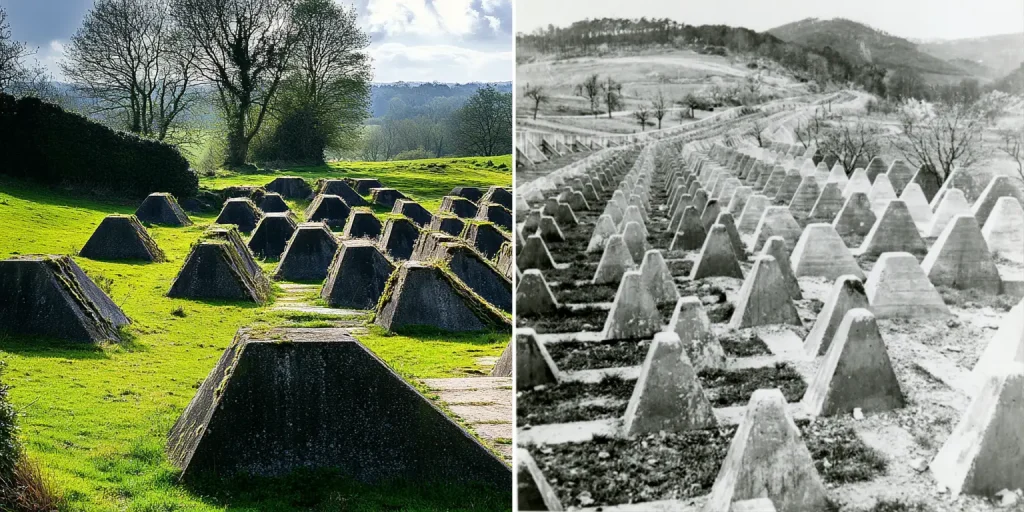





0 Comments