
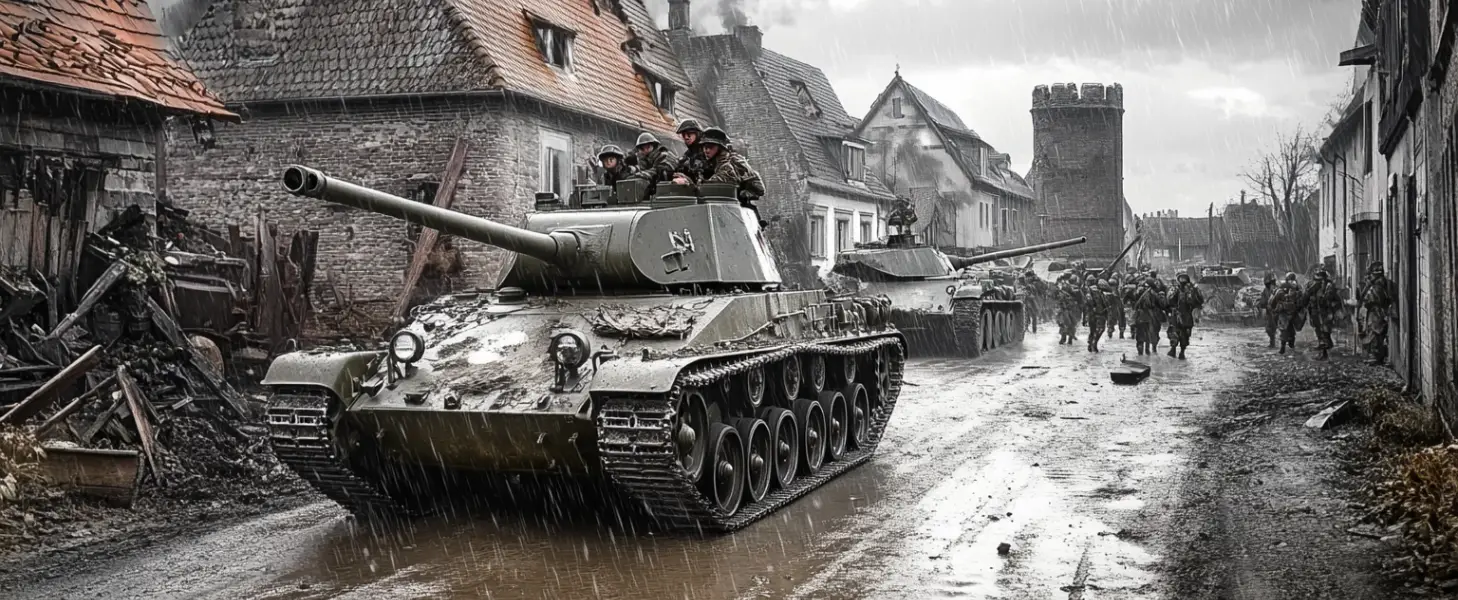
What does it take to break through one of the most fortified defensive lines in history? Discover the untold story of the Battle of Geilenkirchen and the Allied strategy that changed the course of WWII.
Key Takeaways
- The Battle of Geilenkirchen, code-named Operation Clipper, was a pivotal Allied operation during World War II, conducted in November 1944 as part of the push into German territory.
- Geilenkirchen was strategically significant as it was part of the Siegfried Line, a key German defensive system, and located in the Roer Triangle, which provided advantageous positioning for future Allied operations.
- The operation marked one of the few instances where American troops (U.S. 84th Infantry Division) fought under British command (British XXX Corps), showcasing Anglo-American military cooperation.
- The primary objectives of the battle included capturing Geilenkirchen, breaching the Siegfried Line, securing high ground, and clearing enemy forces west of the Roer River.
- The operation faced significant challenges, including deteriorating weather conditions, muddy terrain, and stiff German resistance bolstered by the Siegfried Line’s fortifications.
- Allied forces employed combined arms tactics, including artillery bombardments, infantry advances, and armored support, with over 300 artillery pieces and specialized equipment like flail tanks used to overcome defenses.
- The battle resulted in the capture of Geilenkirchen, breaching the Siegfried Line, and inflicting significant German losses, including 1,200 casualties and 800 prisoners.
- Allied casualties were approximately 1,800 for American forces and 900 for British forces, highlighting the intensity of the fighting.
- The operation demonstrated that the Siegfried Line could be breached, providing a psychological and strategic victory for the Allies.
- Lessons learned from the battle, including coordination between Allied forces and tactics for overcoming fortified positions, informed subsequent operations in the final stages of the war.
- The battle had long-term strategic significance, improving Allied positioning for future offensives toward the Rhine and weakening German defenses in other sectors.
- Geilenkirchen’s capture marked a milestone in the Allied advance into Germany and contributed to the eventual defeat of Nazi forces.
Table of Contents
- Key Takeaways
- Introduction to the Battle of Geilenkirchen
- Historical Context of Operation Clipper
- Tactics and Outcomes of the Battle
- Significance of the Battle in World War II History
- Conclusion and Historical Significance of the Battle of Geilenkirchen
Introduction to the Battle of Geilenkirchen
The Battle of Geilenkirchen, code-named Operation Clipper, was a pivotal military operation conducted during the later stages of World War II. This significant battle took place in November 1944 as part of the Allied forces’ strategic push into German territory. As one of the first German towns to face direct assault from Allied forces, Geilenkirchen represented an important milestone in the campaign to defeat Nazi Germany.
Operation Clipper marked a crucial step in the Allied invasion of Germany, serving as a testing ground for combined British and American military cooperation. The battle occurred at a time when Allied momentum was building following the success of the Normandy landings and subsequent liberation of France and parts of Belgium.
Strategic Importance in the Allied Campaign
The Battle of Geilenkirchen held particular strategic significance for several reasons. First, the town was positioned within the Siegfried Line (also known as the West Wall), a defensive system of fortifications built by Germany along its western border. Breaking through this line was essential for Allied forces to advance deeper into German territory.
Secondly, Geilenkirchen sat in a region known as the Roer Triangle, control of which would provide Allied forces with better positioning for future operations toward the Rhine River. Military planners recognized that securing this area would facilitate the broader objective of penetrating Germany’s industrial heartland.
Thirdly, the operation represented an important test case for Anglo-American military cooperation, as it involved British command of American troops—a relatively uncommon arrangement during the war.
Timing and Context of Operation Clipper
Launched in mid-November 1944, Operation Clipper came at a critical juncture in the European Theater. By this point, Allied forces had liberated Paris (August 1944) and were advancing on multiple fronts toward Germany. However, progress had slowed considerably since the rapid advances of summer 1944, with supply lines stretched and German resistance stiffening.
The operation was part of a larger offensive by the 21st Army Group to clear enemy forces from the area west of the Roer River. This broader campaign was necessary before any major thrust into Germany could be launched, as Allied military leadership was concerned about the threat posed by German-controlled dams on the Roer, which could be used to flood areas and hamper Allied advances.
Forces Involved and Command Structure
Operation Clipper featured a unique command arrangement that highlighted the collaborative nature of Allied operations at this stage of the war. The British XXX Corps led the operation under Lieutenant-General Brian Horrocks, but notably included the U.S. 84th Infantry Division (the “Railsplitters”) fighting under British command—one of the few instances where American ground forces were placed under foreign operational control during World War II.
The primary assault forces consisted of:
- The British 43rd (Wessex) Infantry Division
- The U.S. 84th Infantry Division
- Supporting armor from the British 8th Armoured Brigade
- Artillery support from both British and American units
Facing them were elements of the German 15th Army, including units of the 176th Infantry Division, who were dug into well-prepared defensive positions that formed part of the Siegfried Line.
Objectives of the Battle
The immediate objectives of Operation Clipper were clearly defined:
- Capture the town of Geilenkirchen
- Breach the Siegfried Line defenses in this sector
- Secure the high ground around the town to provide better positions for subsequent operations
- Clear enemy forces from the area west of the Roer River
These tactical goals served the operational objective of positioning Allied forces for a future major offensive across the Roer River and eventually to the Rhine—Germany’s last major natural defensive barrier in the west.
The Battle of Geilenkirchen would prove to be a challenging operation, conducted under difficult weather conditions and against determined German resistance. The outcome would test Allied tactics against German defenses and provide valuable lessons for the campaigns that would follow in the final months of the European war.
As we explore this battle in greater detail in subsequent sections, we’ll examine the planning, execution, and aftermath of Operation Clipper, as well as its place in the broader narrative of World War II’s Western Front operations.
Historical Context of Operation Clipper
The Battle of Geilenkirchen, code-named Operation Clipper, took place within the broader context of the Allied invasion of Germany in late 1944. Following the successful D-Day landings in June and the subsequent liberation of France and parts of Belgium, Allied forces were poised to breach Germany’s western border and push into the Reich itself.
By autumn 1944, the Allied advance had slowed considerably after the rapid progress made during the summer months. The initial momentum of Operation Overlord had given way to a more methodical approach as Allied forces encountered increasingly determined German resistance along the Reich’s borders.
The Allied Strategy in Late 1944
The Allied high command had developed a multi-pronged strategy for the invasion of Germany proper. Field Marshal Bernard Montgomery’s 21st Army Group would advance in the north through the Netherlands and into northern Germany, while General Omar Bradley’s 12th Army Group would push through central Germany. Meanwhile, General Jacob Devers’ 6th Army Group would advance from the south through Alsace-Lorraine.
This coordinated approach aimed to stretch German defenses and prevent the Wehrmacht from concentrating their forces at any single point along the front. The Allies sought to maintain constant pressure across a broad front rather than focusing on a single thrust into enemy territory.
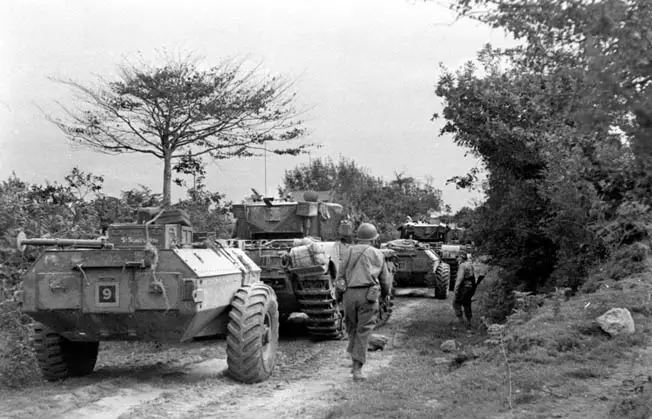
However, several factors complicated this strategy:
- Supply lines had become stretched after the rapid advance through France
- Autumn weather conditions deteriorated, limiting air support
- German resistance stiffened as the fighting moved closer to the German homeland
- The formidable Siegfried Line (Westwall) defensive system protected Germany’s western border
The Siegfried Line and Geilenkirchen’s Strategic Importance
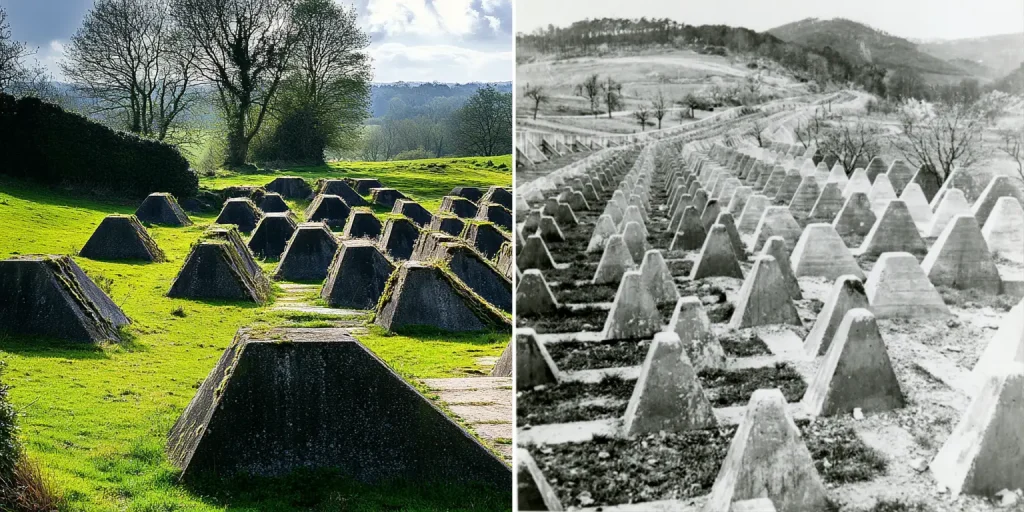
The Siegfried Line represented a significant obstacle to the Allied advance. This defensive network stretched approximately 390 miles along Germany’s western border, featuring:
- Concrete bunkers and pillboxes
- Anti-tank obstacles
- Extensive minefields
- Interlocking fields of fire
Within this defensive system, Geilenkirchen held particular strategic importance. Located in the German state of North Rhine-Westphalia near the Dutch border, this fortified town served as a crucial strongpoint in the Siegfried Line’s northern sector.
Geilenkirchen’s significance stemmed from several factors:
- Its position guarded potential invasion routes into the North German Plain
- The town controlled important road and rail networks vital for German logistics
- Its capture would create a breach in the Siegfried Line that could be exploited for further advances
- The surrounding high ground provided German defenders with excellent observation and firing positions
Challenges Facing the Allied Invasion of Germany
As Allied forces prepared for the push into Germany, they faced numerous challenges that would make Operation Clipper and similar offensives particularly difficult.
Weather Conditions
By November 1944, weather conditions had deteriorated significantly. The autumn rains had turned much of the terrain into mud, severely hampering mobility for tanks and other vehicles. November 1944 was particularly wet in Western Europe, with rainfall significantly above average.
These conditions:
- Limited the effectiveness of armored units
- Reduced visibility for both ground and air operations
- Made supply operations more difficult
- Increased cases of trench foot and other weather-related ailments among troops
Enemy Resistance
As the Allies approached German soil, Wehrmacht resistance intensified notably. Several factors contributed to this:
- German troops were now defending their homeland, increasing motivation
- The Siegfried Line provided formidable defensive positions
- Hitler had ordered a “no retreat” policy, demanding that every inch of German territory be defended
- The German high command had managed to stabilize their forces after the summer retreats
Intelligence reports indicated that despite heavy losses earlier in the campaign, German units defending the Siegfried Line had been reinforced with both veteran troops withdrawn from other fronts and new recruits, including Volkssturm militia units comprised of older men and teenagers.
Preparing for Operation Clipper
Within this challenging context, Allied planners developed Operation Clipper as part of the broader effort to breach the Siegfried Line. The operation would target Geilenkirchen specifically, aiming to create a gap in the German defenses that could be exploited for further advances.
The operation would require careful coordination between American and British forces, marking one of the first joint Anglo-American operations on German soil. The terrain around Geilenkirchen presented additional challenges, with open, gently rolling countryside offering limited cover for attacking forces.
As November 1944 began, the stage was set for what would become known as the Battle of Geilenkirchen. The operation would test the Allies’ ability to overcome both the formidable German defenses and the increasingly harsh weather conditions as they pushed forward with their invasion of Germany.
The success or failure of operations like Clipper would have significant implications for the broader Allied strategy and the timeline for the final defeat of Nazi Germany.
Tactics and Outcomes of the Battle
The Battle of Geilenkirchen represented a significant military engagement that employed complex tactical approaches and yielded important strategic outcomes. As part of the broader Allied push into Germany, the operation demonstrated both the strengths and limitations of combined arms warfare in the challenging conditions of late 1944.
Military Operations and Tactical Approaches
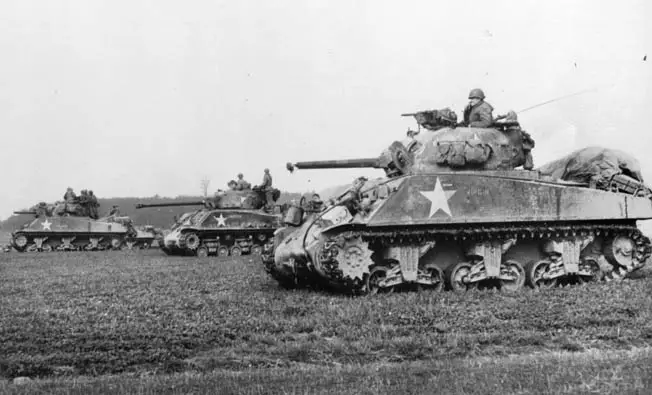
The battle featured a carefully orchestrated deployment of artillery, infantry, and armored divisions. The 84th Infantry Division (the “Railsplitters”) of the US Army worked in close coordination with the British 43rd (Wessex) Division in what became a textbook example of Allied cooperation.
Artillery played a crucial role in softening German defenses before ground assaults. According to military historians, more than 300 artillery pieces were used during the operation, delivering approximately 10,000 shells in preparatory bombardments. This massive firepower was designed to neutralize German bunkers and defensive positions along the Siegfried Line.
Infantry movements were methodically planned to exploit gaps created by artillery barrages. Soldiers advanced in small tactical units, using terrain features for cover whenever possible. The muddy conditions meant that infantry often had to proceed without substantial armored support in certain sectors.
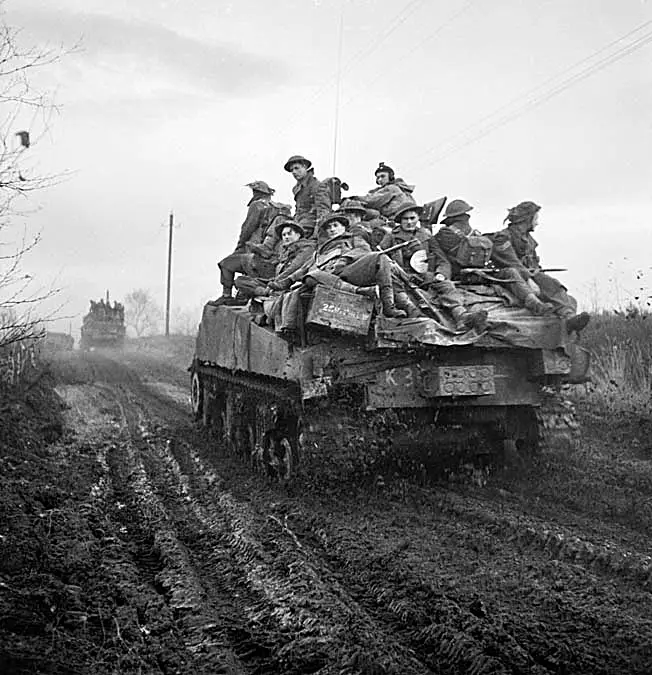
Armored divisions, including the British 8th Armoured Brigade, provided critical firepower and mobility despite challenging terrain. The Sherman tanks, though outgunned by German Panthers and Tigers, offered valuable support to advancing infantry units. Tank commanders employed hull-down positions where possible to maximize protection while engaging enemy positions.
Operation Clipper: Strategic Coordination
Operation Clipper represented an impressive feat of strategic planning and cross-national military cooperation. The operation was distinctive in its use of British and American forces under a unified command structure, demonstrating the evolving nature of Allied coordination in the later stages of World War II.
One key strategy employed during Operation Clipper was the pincer movement designed to encircle Geilenkirchen. The British 43rd Division attacked from the north while American forces pushed from the south, creating pressure on German defenders from multiple directions. This approach prevented the Germans from concentrating their defensive resources at a single point.
Air support formed another crucial element of Operation Clipper. When weather permitted, Allied aircraft conducted bombing runs against German supply lines and reinforcement routes. Over 60 sorties were flown in support of ground operations despite frequently poor visibility conditions.
Significantly, Operation Clipper incorporated extensive use of specialized equipment, including flail tanks and fascines designed to overcome anti-tank ditches and minefields. These engineering solutions proved essential in navigating the heavily fortified approaches to Geilenkirchen.
Battle Outcomes and Casualties
The Battle of Geilenkirchen resulted in the capture of the town and surrounding villages by Allied forces, representing an important breach in the Siegfried Line. This territorial gain provided a potential launching point for further operations into the German heartland.
Casualty figures reveal the intensity of the fighting:
- American forces suffered approximately 1,800 casualties (including killed, wounded, and missing)
- British forces reported roughly 900 casualties
- German losses are estimated at 1,200 casualties, with an additional 800 soldiers taken prisoner
Beyond the human cost, the battle resulted in significant material losses for the German forces, including:
- 28 artillery pieces captured or destroyed
- 18 armored vehicles knocked out
- Numerous bunkers and defensive positions neutralized
Perhaps most importantly, the battle demonstrated that the Siegfried Line, despite its fearsome reputation, could be breached through coordinated Allied operations. This psychological victory may have been as important as the territorial gains achieved.
Operational Challenges
The Battle of Geilenkirchen presented numerous challenges that tested Allied capabilities and adaptability. Logistical issues ranked among the most significant obstacles faced by attacking forces.
The muddy terrain severely hampered vehicle movement, with supply trucks frequently becoming bogged down in the saturated ground. According to battlefield reports, some units resorted to using horses and hand-carried supplies to maintain ammunition and food deliveries to forward positions. Fuel consumption for vehicles increased dramatically due to the poor ground conditions, creating additional supply pressures.
Weather conditions proved exceptionally challenging throughout Operation Clipper. November 1944 brought persistent rain, fog, and low temperatures to the region. These conditions:
- Limited air support opportunities
- Reduced visibility for artillery observers
- Decreased the effectiveness of tanks and other heavy equipment
- Created miserable conditions for infantry, leading to cases of trench foot and exposure
The weather particularly affected observation capabilities, forcing greater reliance on infantry patrols for reconnaissance rather than aerial observation. This increased the risk to forward units and slowed the pace of operations.
Communication difficulties also plagued the operation. Wet conditions damaged radio equipment, and coordination between American and British forces sometimes suffered from procedural differences. Commanders had to establish liaison officers at various headquarters to ensure smooth information flow between allied units.
Long-term Strategic Impact
The successful conclusion of the Battle of Geilenkirchen had several important strategic implications for the ongoing Allied campaign. By breaching the Siegfried Line at this point, Allied forces demonstrated that Germany’s vaunted Western Wall was vulnerable.
The operation also forced German commanders to commit reserves to this sector, potentially weakening other areas of the front. Military analysts have noted that the German 15th Army had to divert units originally intended for the Ardennes buildup (which would later become the Battle of the Bulge) to counter the threat at Geilenkirchen.
Furthermore, the battle provided valuable experience in combined operations that would inform future Allied offensives. Lessons learned about coordination between different national forces, the use of specialized equipment, and tactics for overcoming fortified positions would be applied in subsequent campaigns.
The Battle of Geilenkirchen, though not as widely recognized as some other World War II engagements, thus represents an important chapter in the story of the Allied advance into Germany and the ultimate defeat of Nazi forces.
Significance of the Battle in World War II History
The Battle of Geilenkirchen, also known as Operation Clipper, holds an important place among the many World War II battles that shaped the final stages of the conflict. As the Allies pushed toward Germany’s western border in November 1944, this battle represented a critical step in the broader strategy to penetrate the German homeland and bring the war to its conclusion.
Impact on Allied Advance into Germany
The Battle of Geilenkirchen marked a significant milestone in the Allied campaign. For the first time, American forces operated under British command on the battlefield, demonstrating unprecedented levels of cooperation between the Allied powers. This collaboration proved essential as the Allies faced increasingly desperate German resistance along the Siegfried Line.
Moreover, the battle served as a testing ground for new tactics against fortified positions. The Allies learned valuable lessons about combined arms operations that would later be applied in subsequent pushes into Germany. The success at Geilenkirchen boosted Allied confidence in their ability to breach German defenses, even in unfavorable weather conditions.
As military historian Charles MacDonald noted, “The methodical reduction of the Geilenkirchen salient demonstrated that even the formidable West Wall could be penetrated with proper planning and execution.”
Comparison with Other World War II Battles
When examining World War II battles on the Western Front, Geilenkirchen stands out in several ways. Unlike larger operations such as the Battle of the Bulge (which would begin just weeks later), Geilenkirchen was a more focused, limited-objective attack. However, its strategic importance shouldn’t be underestimated.
While the Battle of the Bulge involved over a million troops and resulted in nearly 200,000 casualties across both sides, Geilenkirchen was fought on a smaller scale but with similar intensity. The muddy conditions and fierce German resistance made the fighting just as challenging for the soldiers involved.
Furthermore, unlike the surprise German offensive in the Ardennes, Geilenkirchen represented a deliberate, planned Allied operation that achieved its objectives despite difficult circumstances. This success contrasted with some other World War II battles where Allied forces were caught off guard or faced setbacks.
Geilenkirchen History and Local Impact
For the town of Geilenkirchen and surrounding areas, the battle left an indelible mark on local history. Before November 1944, Geilenkirchen had largely escaped major damage despite years of war. However, the battle changed this dramatically.
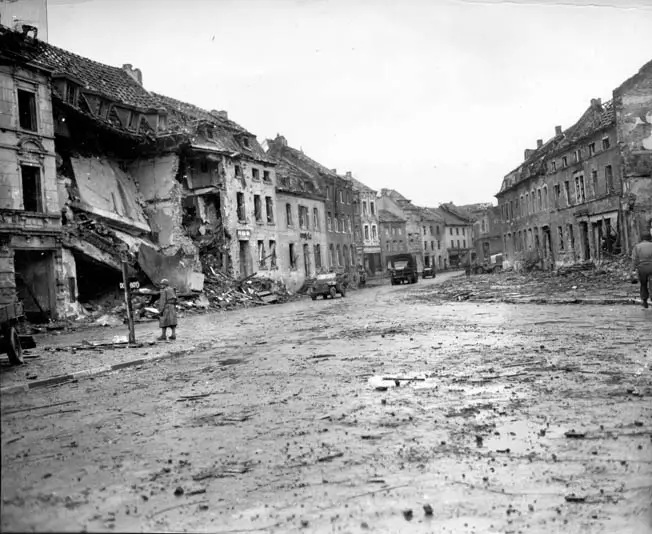
The intense artillery bombardment and house-to-house fighting left much of the town in ruins. Civilian infrastructure was severely damaged, and many residents became refugees. According to local historical records, approximately 80% of Geilenkirchen’s buildings suffered damage during the battle.
In the decades following the war, Geilenkirchen history became intertwined with the memory of these events. Memorial sites and commemorations have helped preserve the significance of what happened there. The town’s reconstruction and eventual recovery stand as a testament to resilience in the face of wartime destruction.
Local historian Heinrich Mueller writes, “The battle transformed not just the physical landscape but the cultural identity of Geilenkirchen, creating a lasting connection to this pivotal moment in World War II.”
Allied Coordination and Tactical Innovations
One of the most significant aspects of the Battle of Geilenkirchen was how it showcased Allied coordination at multiple levels. The operation featured:
- British and American ground forces working in tandem
- Close air support from both RAF and USAAF units
- Integrated artillery plans across different Allied formations
- Shared logistics and intelligence resources
This level of cooperation wasn’t always seamless, but it demonstrated the growing maturity of the Allied command structure. Field Marshal Bernard Montgomery’s leadership of the operation highlighted the willingness of American forces to operate under British command when strategic needs demanded it.
Tactically, the battle revealed both strengths and weaknesses in Allied approaches. The use of specialized armor (particularly flail tanks to clear minefields) proved effective, while the challenges of fighting in mud and poor visibility forced adaptations in infantry tactics.
Overcoming German Defenses
The Battle of Geilenkirchen provided valuable insights into the challenges of overcoming entrenched German defenses. The Siegfried Line (or West Wall) represented one of the most formidable defensive systems the Allies would face, with:
- Concrete bunkers with interlocking fields of fire
- Extensive minefields and anti-tank obstacles
- Pre-registered artillery positions
- Dug-in infantry positions with excellent cover
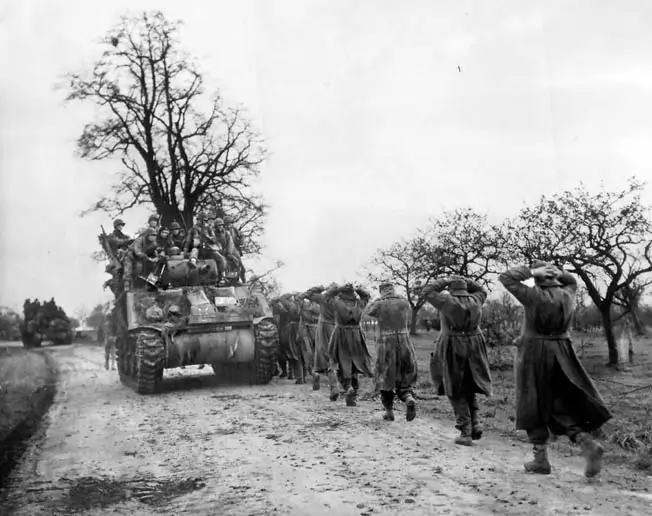
Despite these challenges, the Allied forces developed effective countermeasures. The combination of overwhelming firepower, specialized engineering vehicles, and infantry determination eventually overcame the defenses. This success provided a template for future operations against similar fortifications.
Military analyst John Keegan observed that “Geilenkirchen demonstrated that even the most formidable fixed defenses could be overcome through proper combined arms tactics and persistence.”
Long-term Strategic Significance
While not as well-known as some other World War II battles, Geilenkirchen’s capture contributed significantly to the overall Allied strategy. By securing this salient in the German lines, the Allies:
- Improved their position for future operations toward the Rhine
- Denied the Germans a potential staging area for counterattacks
- Gained valuable experience in urban combat and operations against fortified positions
- Demonstrated their ability to conduct successful offensive operations despite adverse weather
The battle also had psychological importance, as it represented another step in the inexorable Allied advance into Germany itself. Each town captured reinforced the message that Germany’s defeat was inevitable, potentially weakening civilian and military resolve.
In the broader context of World War II history, Geilenkirchen stands as an example of the methodical, determined approach that characterized the final phase of the Allied campaign in Northwest Europe – less dramatic than the rapid advances of summer 1944, but equally essential to achieving final victory.
Conclusion and Historical Significance of the Battle of Geilenkirchen
The Battle of Geilenkirchen, code-named Operation Clipper, stands as a significant yet often overlooked engagement in the final stages of World War II. As we’ve explored throughout this article, this November 1944 battle represented a crucial step in the Allied push into Germany and the eventual defeat of Nazi forces.
Key Strategic Outcomes
The battle achieved several important military objectives:
- Successfully breached the outer defenses of the Siegfried Line
- Secured a vital transportation hub that disrupted German supply lines
- Demonstrated effective Allied cooperation between American and British forces
- Provided valuable tactical lessons for urban combat operations
- Created a foothold for further Allied advances into German territory
Perhaps most notably, the operation marked the first time British troops fought on German soil during World War II, a psychologically significant moment for both Allied forces and German defenders.
Tactical Innovations and Challenges
The Battle of Geilenkirchen highlighted several tactical elements that would influence later operations:
- The effective use of combined arms operations, integrating infantry, armor, and air support
- The challenges of fighting in muddy, waterlogged terrain that limited mobility
- The difficulties of urban combat against determined defenders
- The importance of weather considerations in planning major offensives
The operation’s success, despite harsh weather conditions and fierce German resistance, demonstrated the growing proficiency of Allied forces in coordinated battlefield operations.
Human Cost and Civilian Impact
As with all World War II battles, we must acknowledge the human toll. The fighting around Geilenkirchen resulted in significant casualties on both sides. There were several hundred Allied casualties and an estimated similar number of German losses. Additionally, the civilian population endured tremendous hardship, with many homes destroyed and families displaced.
The battle’s aftermath left the town in ruins, requiring years of rebuilding. This pattern of destruction and reconstruction would be repeated across Germany as the war progressed toward its conclusion.
Broader Context in the Allied Advance
When viewed within the larger framework of the Allied invasion of Germany, Operation Clipper represents an important stepping stone. While not as well-known as major operations like Market Garden or the Battle of the Bulge, the Geilenkirchen offensive contributed significantly to the overall Allied strategy.
The battle helped to:
- Maintain momentum after the Normandy breakout
- Test German defensive capabilities along the Siegfried Line
- Provide valuable intelligence about German troop dispositions
- Boost Allied morale by capturing German territory
Military historians now recognize that these smaller, supporting operations were essential components of the broader Allied victory, wearing down German resources and preventing effective concentration of forces.
Legacy and Historical Perspective
Today, the Battle of Geilenkirchen serves as an important case study in military history. It demonstrates how combined operations between different Allied forces could overcome significant obstacles. The cooperation between American and British units, despite differences in equipment, tactics, and command structures, showcased the strength of the Allied coalition.
The battle also highlights the often-overlooked role of smaller engagements in the larger narrative of World War II. While major battles like Stalingrad or D-Day rightfully receive significant attention, operations like Clipper were the building blocks of ultimate victory.
For the people of Geilenkirchen, the battle represents a pivotal moment in their local history. The town’s modern identity was shaped by the destruction and subsequent rebuilding following the fighting. Memorial sites and commemorative events continue to honor those who fought and died during those November days in 1944.
Lessons for Modern Military Operations
Studying the Battle of Geilenkirchen continues to provide valuable insights for contemporary military planners:
- The importance of terrain analysis and weather considerations
- The challenges of urban warfare and civilian protection
- The value of multinational cooperation and standardized procedures
- The need for flexible tactics when facing determined defenders
These lessons remain relevant in modern conflicts, where similar challenges often emerge in different contexts.
Final Thoughts
As we reflect on the Battle of Geilenkirchen and Operation Clipper, we gain a deeper appreciation for the complexities of World War II and the countless smaller engagements that collectively determined its outcome. The battle reminds us that history is made not only in dramatic, decisive moments but also through persistent effort across numerous fronts.
Understanding this battle helps us better comprehend the final phases of World War II in Europe and honors the sacrifices made by those who fought to liberate Europe from Nazi occupation. The courage and determination displayed at Geilenkirchen, by both military personnel and civilians, continues to inspire and educate us today.













0 Comments